



What's Happening?
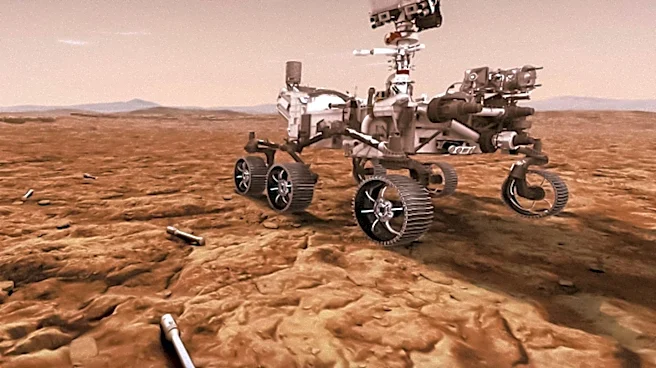
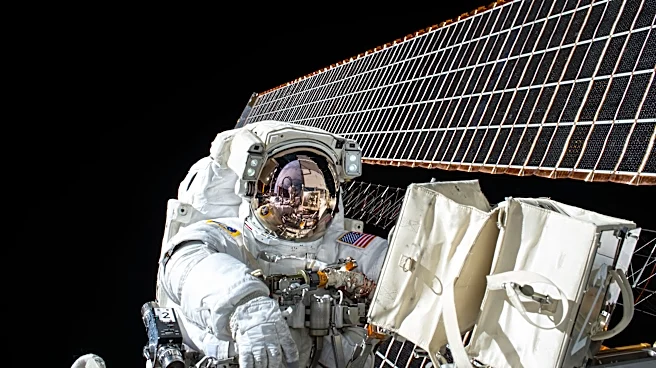
Assistant Professor Azadeh Haghighi at the University of Illinois Chicago (UIC) is leading research to develop intelligent welding technology crucial for NASA's long-term exploration goals, particularly for Moon and Mars missions. This research, supported
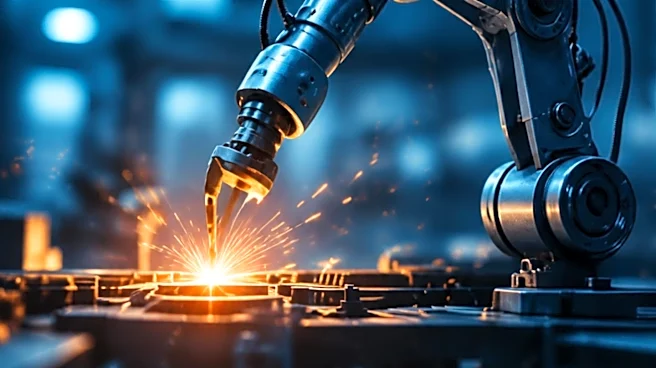
by NASA through the 'Weld-ASSIST' project, focuses on enabling in-space manufacturing and assembly, which will reduce logistical burdens and reliance on Earth-based supplies. Haghighi's team is addressing three key challenges in space welding: low temperatures, extreme vacuum, and microgravity. Low temperatures degrade weldability of high-thermal-conductivity materials, extreme vacuum alters keyhole geometry and chemical composition, and microgravity prevents gas bubbles from escaping, leading to weld defects. The project utilizes multi-scale multi-physics models integrated with physics-informed machine learning to create the first-ever digital twin platform for evaluating welding processes under extreme space conditions.
Why It's Important?
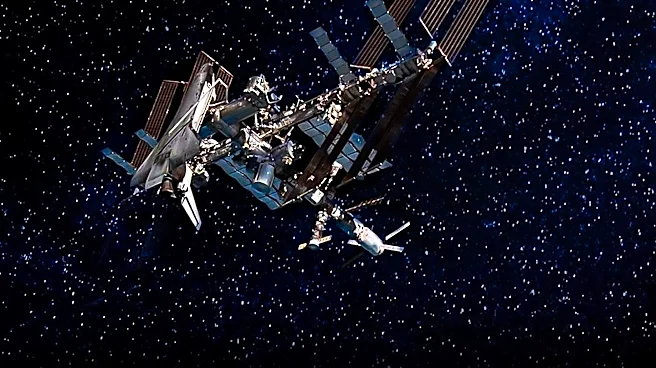
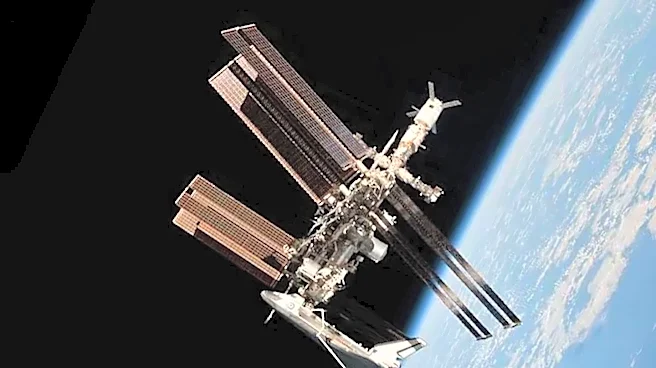
The development of reliable in-space welding technology is critical for the success and sustainability of future deep-space missions. Currently, the logistical challenges and costs associated with transporting all necessary components from Earth are immense. The ability to manufacture and repair structures in space, using advanced welding techniques, will significantly reduce mission costs, increase operational flexibility, and enhance astronaut safety. This research directly supports NASA's objectives for establishing a permanent human presence on the Moon and eventually Mars, as it enables the construction of habitats, vehicles, and infrastructure using local resources. The integration of artificial intelligence and digital twin technology in welding processes represents a leap forward, minimizing trial-and-error and ensuring high-quality, one-shot welds in the unforgiving space environment.
What's Next?
The research models developed by Haghighi's team will undergo validation through Earth-based experiments, parabolic flight tests, and existing public data. Successful validation will pave the way for the practical application of this intelligent welding technology in future NASA missions. The project also aims to extend its capabilities to support resource utilization on the Moon and Mars, including construction and repair using locally sourced materials like regolith. Further development will focus on refining the digital twin platform to provide robust decision-support capabilities for astronauts and autonomous systems performing in-space manufacturing. This ongoing work will continue to train students in advanced manufacturing, computational modeling, and AI, preparing a skilled workforce for the evolving space industry.
Beyond the Headlines
This research has broader implications beyond just space exploration. The methodologies and technologies developed for intelligent welding in extreme space conditions could find applications in challenging terrestrial environments, such as deep-sea exploration, nuclear facility maintenance, or remote industrial operations where human intervention is limited. The integration of physics-informed machine learning and digital twins represents a paradigm shift in manufacturing, moving towards more autonomous, precise, and reliable production processes. Furthermore, the project highlights the critical role of academic institutions in driving innovation for national strategic goals, fostering interdisciplinary collaboration between engineering, computer science, and materials science. The educational opportunities provided to students also ensure a pipeline of talent equipped with cutting-edge skills for the future of advanced manufacturing and space technology.