


What's Happening?
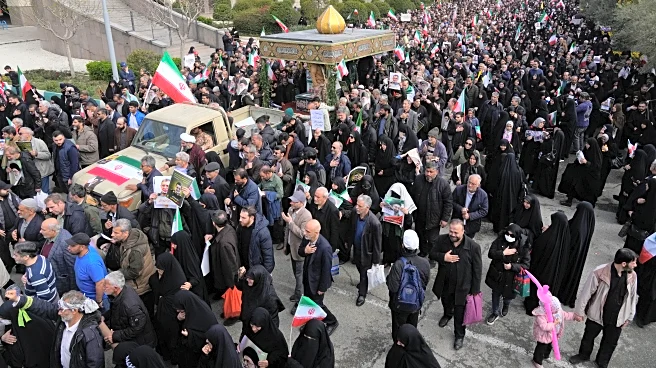
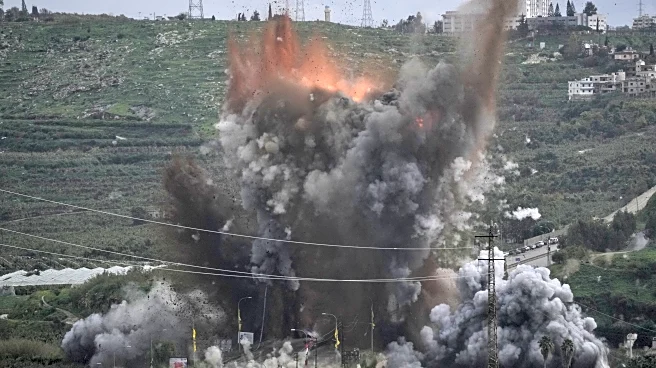
Admiral Brad Cooper, the head of the U.S. Central Command (CENTCOM), has reported that Iran has intensified its attacks on civilian sites across the Middle East. This escalation is described as a sign of desperation due to the deterioration of Iran's
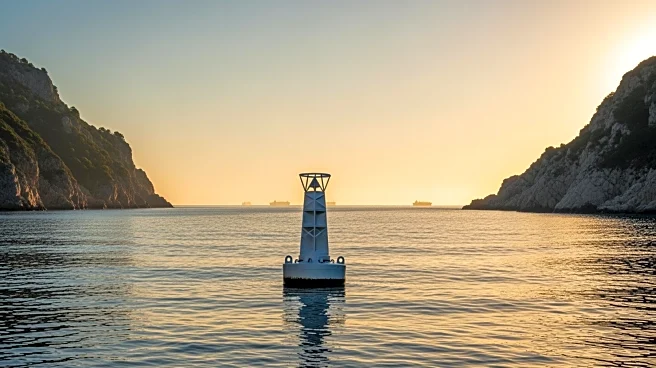
military capabilities. Since the commencement of operations Roaring Lion and Epic Fury on February 28, Iran has deliberately targeted civilian areas over 300 times. The operations have significantly weakened Iran's naval capabilities, with approximately 140 vessels either sunk or severely damaged. Despite the physical openness of the Strait of Hormuz for transit, shipping remains disrupted due to Iranian attacks using drones and missiles.
Why It's Important?
The increased targeting of civilian sites by Iran highlights the escalating tensions in the Middle East and the potential for broader regional instability. The U.S. and its allies are actively working to secure the Strait of Hormuz, a critical chokepoint for global oil shipments. The situation underscores the strategic importance of maintaining open and secure shipping lanes in the region. The reduction in Iran's military capabilities could lead to a shift in the balance of power, affecting regional security dynamics and potentially leading to further international involvement.
What's Next?
The U.S. and its allies are expected to continue efforts to secure the Strait of Hormuz and mitigate the threat posed by Iranian attacks. This may involve increased military presence and further operations to weaken Iran's naval capabilities. The international community will likely monitor the situation closely, as any escalation could have significant implications for global oil markets and regional security. Diplomatic efforts may also be pursued to de-escalate tensions and prevent further civilian casualties.