










What's Happening?
Kansas Governor Laura Kelly recently addressed key economic issues, including property taxes, artificial intelligence (AI), and data centers, at the 2026 Kansas Economic Policy Conference at the University of Kansas. With approximately 100 attendees,
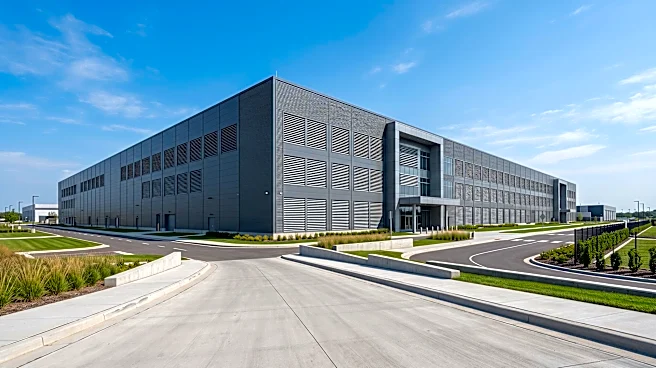
Governor Kelly, who is term-limited and preparing to leave office, shared her insights and concerns. She highlighted that property taxes are a significant talking point, advocating for stronger partnerships between state and local governments to alleviate the burden on local entities. According to the Kansas Legislative Research Department, property taxes constitute over 30% of the state's combined state and local revenue, totaling $6.6 billion in fiscal year 2025. This represents a 3.8% increase from 2024 and approximately $1 billion more than three years prior. Governor Kelly also touched upon the public's apprehension regarding AI due to its uncertainty and advised college graduates to embrace patience when entering the workforce. Additionally, she raised concerns about the water and energy consumption of data centers, emphasizing that the costs should not be passed on to everyday citizens and that communities should have the final say on their establishment.
Why It's Important?
The discussions led by Governor Kelly at the Kansas Economic Policy Conference underscore critical economic and societal challenges facing Kansas and potentially other U.S. states. The rising property tax burden, as evidenced by the $6.6 billion collected in fiscal year 2025, directly impacts homeowners and businesses, influencing affordability and economic growth. Governor Kelly's suggestion for increased state support for local government services like corrections and mental health could lead to policy shifts aimed at stabilizing or reducing property tax rates. The growing public concern over AI, as noted by Governor Kelly, reflects a broader national conversation about the ethical, economic, and social implications of advanced technology. Her advice for patience among new graduates highlights the evolving job market landscape. Furthermore, the debate surrounding data centers' resource consumption and community impact is crucial for environmental sustainability and local governance, as these facilities require substantial water and energy, potentially straining local resources and infrastructure. The political nature of data center development, as described by Kelly, indicates potential future legislative battles over their regulation and placement.
What's Next?
As Governor Kelly approaches the end of her term, the issues she highlighted are likely to remain central to the political discourse in Kansas. The upcoming gubernatorial election, with State Senators Ty Masterson and Cindy Holscher vying for her replacement, suggests that property tax reform, AI regulation, and data center policies will be key campaign topics. Lawmakers in areas affected by high property taxes are expected to face continued pressure from constituents to find solutions, potentially leading to new legislative proposals for state-local government partnerships or other tax relief measures. The discussion around AI's uncertainty and its impact on the workforce will likely continue to shape educational and economic development strategies. For data centers, the emphasis on community input and cost allocation suggests that future projects may face increased scrutiny and require more transparent negotiations regarding their environmental and economic footprint. The current polarized political climate, as described by Kelly, indicates that consensus on these complex issues may be challenging to achieve, at least until after the midterm elections.
Beyond the Headlines
Governor Kelly's remarks delve into deeper implications beyond immediate policy changes. The persistent rise in property taxes, a significant revenue source for Kansas, reflects a broader trend of increasing local government reliance on property assessments, which can exacerbate economic inequality and housing affordability crises. Her call for state assumption of local burdens like corrections and mental health services points to a fundamental re-evaluation of fiscal responsibilities between different levels of government, potentially leading to a more centralized approach to public services. The public's 'petrified' reaction to AI underscores a societal anxiety about technological disruption, job displacement, and ethical concerns, which could drive demand for more robust regulatory frameworks and public education initiatives. The politicization of data centers, particularly concerning their resource consumption and community consent, highlights a growing tension between economic development and environmental stewardship. This suggests a future where technological infrastructure projects will increasingly be judged not just on their economic benefits but also on their social and ecological costs, potentially leading to more localized control over such developments and a shift towards more sustainable practices.