
What's Happening?
Fox News host Rachel Campos-Duffy, wife of Transportation Secretary Sean Duffy, publicly criticized President Trump's recent oil deal with Venezuela. President Trump announced on Friday that he had secured
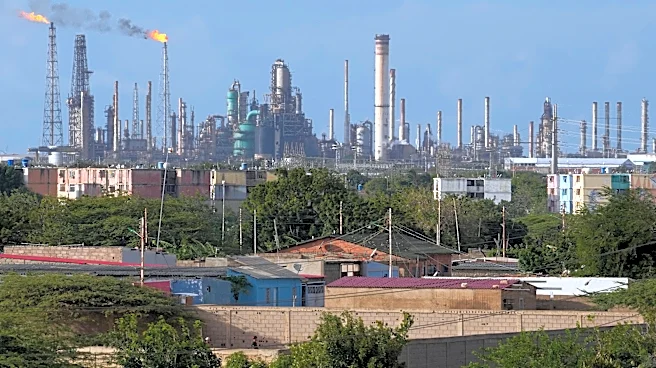
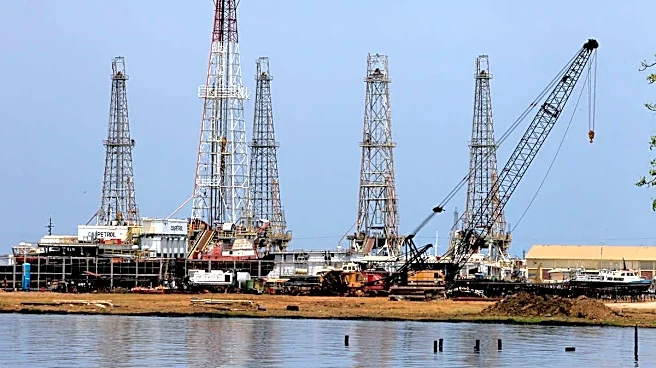
an agreement with Venezuela's acting President Delcy Rodríguez, granting the U.S. majority control over Venezuela's 65 billion barrels of proven oil reserves. This deal has drawn scrutiny because Rodríguez was installed as interim president by President Trump after U.S. Special Forces reportedly abducted Nicolás Maduro. Campos-Duffy expressed her concern on 'Fox & Friends Weekend' that the deal was made without elections in Venezuela, questioning the primary purpose of removing Maduro if it wasn't to allow the Venezuelan people to choose their leader. She highlighted that Venezuelans reportedly do not trust Rodríguez and that President Trump's motivations would be questioned across Latin America until elections occur. No official text or details of the agreement have been released.
Why It's Important?
This public questioning by a prominent Fox News host, whose husband serves in President Trump's administration, signals potential internal dissent or at least a willingness to scrutinize the administration's foreign policy decisions, even from within its typical media allies. The deal itself, if confirmed and implemented, would represent a significant shift in U.S. energy policy and its relationship with Venezuela, potentially impacting global oil markets and geopolitical dynamics in Latin America. The lack of transparency regarding the agreement's details and the method of Rodríguez's installation raises concerns about democratic principles and international law. The criticism from Campos-Duffy, echoing sentiments about the will of the Venezuelan people, underscores the complex ethical and political considerations surrounding U.S. intervention and resource acquisition in other nations. The situation also highlights the delicate balance between U.S. economic interests and its stated commitment to promoting democracy abroad.
What's Next?
The immediate next steps involve the potential release of the official text of the U.S.-Venezuela oil agreement, which would provide crucial details on its terms, implementation, and the roles of various parties. Without this, questions about the deal's legitimacy and practical execution will persist. President Trump and his administration may face continued pressure to clarify the motivations behind the deal and address concerns about the lack of democratic process in Venezuela. The reactions from other Latin American nations and international bodies will also be critical in shaping the perception and future of this agreement. GOP Representative María Salazar initially shared misgivings about the deal but later changed her stance, indicating potential political maneuvering and evolving perspectives within the Republican party regarding this issue. The White House has not yet responded to requests for comment, and their eventual statement will be closely watched.
Beyond the Headlines
The controversy surrounding President Trump's Venezuela oil deal extends beyond immediate political and economic implications, touching upon deeper ethical and legal considerations. The U.S. installation of an interim president in Venezuela and subsequent resource agreement raises questions about national sovereignty and the principle of non-intervention in the internal affairs of other states. This approach could set a precedent for future U.S. foreign policy, potentially leading to accusations of neo-colonialism or resource exploitation under the guise of promoting democracy. The deal also highlights the tension between U.S. energy security interests and its commitment to democratic values. The lack of transparency and the reported distrust among Venezuelans towards Rodríguez could fuel anti-American sentiment and instability in the region. Furthermore, the public criticism from a figure like Rachel Campos-Duffy, despite her husband's position, suggests a broader debate within conservative circles about the consistency and morality of U.S. foreign policy actions.