







What's Happening?
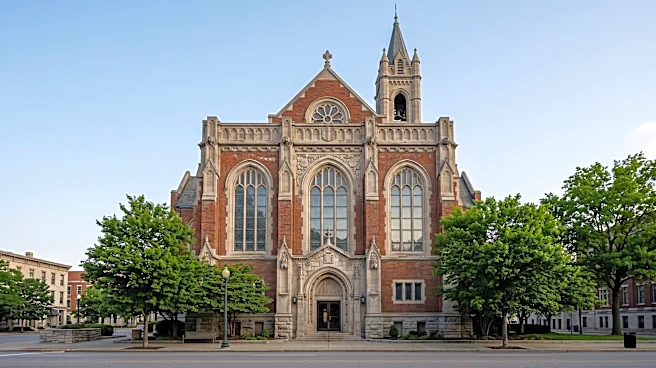
The St. Francis de Sales Catholic Church building, a century-old structure in Indianapolis formerly owned by Martin University, has been temporarily saved from demolition. Eastern Star Church, the current owner, had sought to demolish the 113-year-old
brick and limestone church after acquiring the Martin University campus properties. This prompted the Indianapolis Historic Preservation Commission (IHPC) to hold an emergency meeting in August to grant the building a preliminary historic designation. Ahead of a scheduled Nov. 18 vote on its historic status, Eastern Star Church requested a delay, as it is now attempting to sell the former Catholic church. Attorney Howard Stevenson, representing Eastern Star Church, indicated that a potential buyer has expressed interest, though their identity was not disclosed. The Metropolitan Development Commission, which is responsible for approving such designations, agreed on Wednesday to postpone the vote until at least January 6. The church, built in 1913, served as the St. Francis de Sales Catholic parish until 1983 and later as Martin University's primary performing arts center.
Why It's Important?
The preservation of the St. Francis de Sales Catholic Church building holds significant cultural and historical importance for Indianapolis. Its potential demolition sparked concerns among preservationists and community members due to its age and its role in the city's history, including its connection to Martin University, Indiana's only predominantly Black university until its closure. A historic designation would significantly increase the difficulty of demolition, requiring city approval for any changes and generally only allowing demolition if there is an imminent safety hazard. This situation highlights the ongoing tension between urban development and historical preservation, as new property owners often seek to redevelop sites while preservation groups advocate for maintaining architectural heritage. The delay in the vote and the church's decision to sell indicate a potential shift towards finding a solution that could save the building, possibly through a new owner committed to its preservation or adaptive reuse.
What's Next?
The Metropolitan Development Commission has postponed its vote on the historic designation of the St. Francis de Sales Catholic Church until at least January 6. During this interim period, Eastern Star Church will continue its efforts to sell the property to a potential buyer. The outcome of these sales negotiations will likely influence the future of the church building. If a buyer interested in preserving the structure emerges, it could lead to a resolution that avoids demolition. Conversely, if no suitable buyer is found, the issue of demolition versus historic designation will likely return to the forefront. The Indianapolis Historic Preservation Commission and Indiana Landmarks have already worked with Eastern Star Church to conduct a structural assessment, which found the building to be well-built with issues that can be addressed through stabilization. The city staff will continue to monitor the situation, and community groups interested in preservation will likely remain engaged.
Beyond the Headlines
This situation extends beyond a single building's fate, touching upon broader themes of community identity, urban planning, and the legacy of institutions. The St. Francis de Sales Catholic Church is not just an old building; it represents a piece of Indianapolis's religious, educational, and African American history, having served as part of Martin University. Its potential demolition raised questions about how cities balance growth with the protection of historical assets, especially in rapidly developing areas. The involvement of organizations like Indiana Landmarks and the IHPC underscores the growing recognition of the value of preserving structures that contribute to the unique character and narrative of a city. The outcome of this case could set a precedent for how similar historical properties are handled in Indianapolis, influencing future decisions on urban redevelopment and preservation efforts.