




What's Happening?
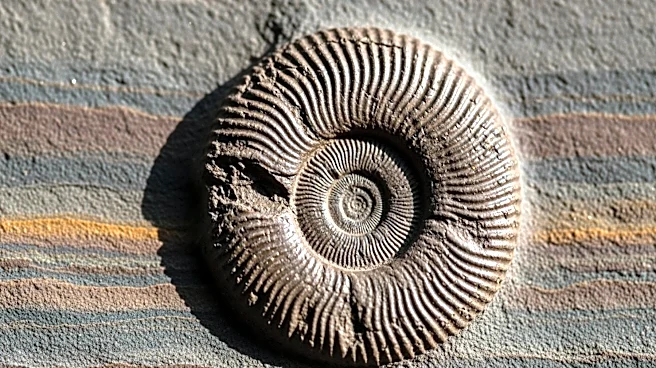
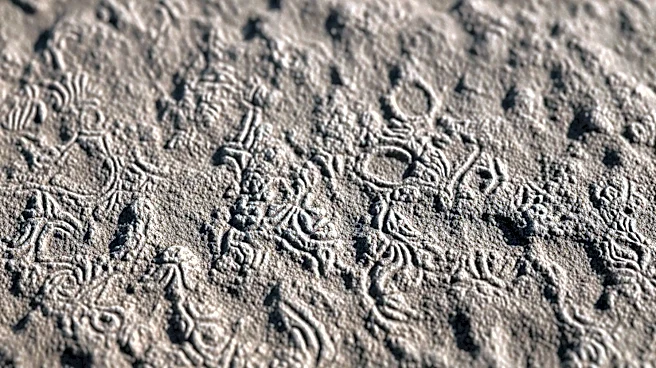
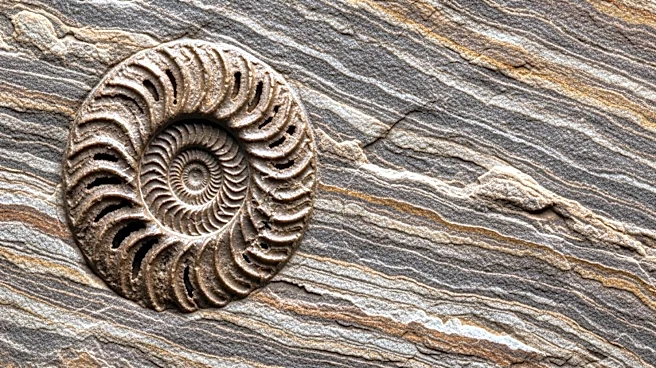
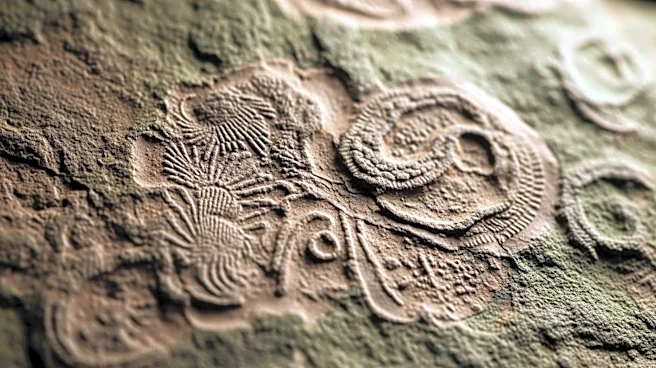
A 300-million-year-old fossil, previously identified as the world's oldest octopus, has been reclassified as a nautiloid following advanced imaging studies. The fossil, known as Pohlsepia mazonensis, was initially thought to be an octopus due to its appearance,
which included features like eight arms. However, recent synchrotron imaging revealed the presence of a radula, a feeding structure with rows of teeth, characteristic of nautiloids rather than octopuses. This discovery, published in the journal Proceedings of the Royal Society B, resolves a long-standing debate in paleontology and provides the oldest known evidence of nautiloid soft tissue. The findings suggest that octopuses appeared much later in the evolutionary timeline, during the Jurassic period, rather than the previously believed Palaeozoic era.
Why It's Important?
This reclassification has significant implications for the understanding of cephalopod evolution. By pushing the origin of octopuses to the Jurassic period, the study reshapes the timeline of cephalopod evolution and highlights the importance of using modern technology to revisit and verify historical scientific claims. The discovery also underscores the potential for advanced imaging techniques to uncover hidden details in fossils, which can lead to new insights into ancient life forms. This could influence future research directions in paleontology and evolutionary biology, as scientists may need to reassess other fossils with similar scrutiny.