
What's Happening?
Gaza is experiencing a severe economic crisis where basic food items, such as eggs, have become a luxury due to Israeli import restrictions, high coordination fees, and the destruction of local agriculture.
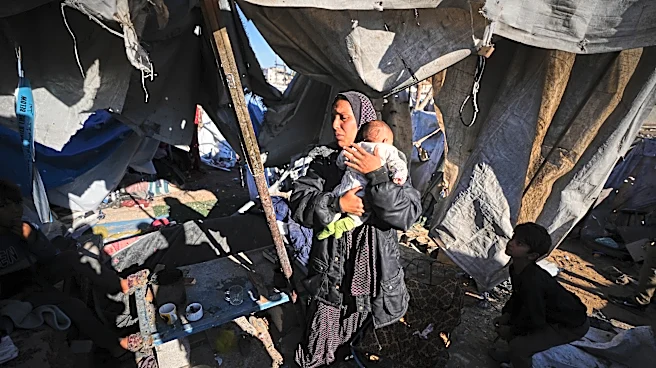
The price of eggs has doubled to quadrupled compared to pre-war levels, making them unaffordable for most of Gaza's 2.2 million Palestinians, who largely depend on international aid. The World Food Programme (WFP) has reduced the number of people receiving food aid by 500,000 due to funding shortfalls, further exacerbating the situation. Israeli authorities attribute high prices to Hamas taxes, while Palestinian traders blame Israeli restrictions and fees charged by intermediaries in a tightly controlled import system. This system has also led to the flourishing of cross-border smuggling networks, further inflating prices.
Why It's Important?
The escalating food prices and aid reductions in Gaza signify a deepening humanitarian crisis with severe implications for the civilian population. The destruction of local agricultural capacity has created an almost complete reliance on imports, which are subject to a complex and costly Israeli-controlled system. This situation not only leads to widespread food insecurity and malnutrition but also fuels a black market, benefiting a few while impoverishing the majority. The scaling back of aid by organizations like the WFP due to donor fatigue and new Israeli registration rules for NGOs further compounds the crisis, highlighting the fragility of humanitarian efforts in conflict zones and the urgent need for sustained international support.
What's Next?
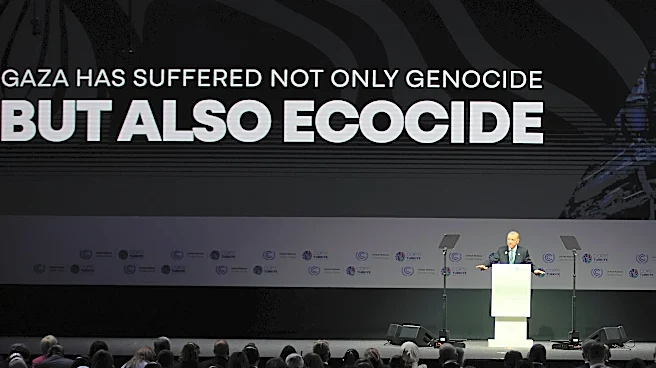
The current situation suggests that food prices in Gaza are unlikely to decrease and may continue to climb, especially with ongoing Israeli restrictions and the potential for further aid cuts. The International Court of Justice is currently hearing a genocide case that includes allegations of Israel's obstruction of aid and destruction of food production, which could lead to international pressure for policy changes. However, without significant shifts in import policies, increased humanitarian funding, and a rebuilding of Gaza's local economy, the population will remain highly vulnerable. The reliance on a limited number of approved traders and the prevalence of coordination fees indicate that systemic changes are needed to ensure affordable access to essential goods.
Beyond the Headlines
The crisis in Gaza extends beyond immediate food shortages to a broader issue of economic strangulation and control. The Israeli-designed import system, intended to prevent Hamas from generating revenue, has inadvertently created a complex web of fees and restrictions that disproportionately affect Palestinian civilians. This system has fostered an environment where basic necessities become commodities for profiteering, and even humanitarian aid is subject to bureaucratic hurdles. The long-term implications include a generation growing up with chronic malnutrition, a destroyed economy, and a deep sense of dependency, making future recovery and self-sufficiency extremely challenging. The situation also raises ethical questions about the responsibilities of occupying powers and the effectiveness of international aid in highly controlled environments.