
What's Happening?
The Department of Homeland Security (DHS) is transitioning its immigration enforcement strategy from high-profile operations to a more discreet approach that relies heavily on local police partnerships.
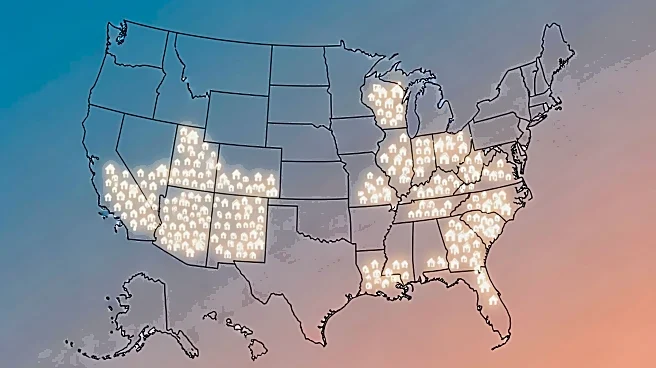
This shift follows the controversial and aggressive Immigration and Customs Enforcement (ICE) operation in Minnesota, which faced significant public backlash. Markwayne Mullin, the new DHS secretary, has emphasized the importance of local law enforcement collaboration, suggesting that ICE should focus more on transportation roles rather than frontline enforcement. This strategy is being implemented through the federal 287(g) program, which allows local police to perform some duties of ICE officers. The program has seen a significant increase in participation, with over 1,600 agreements across 39 states, affecting about a third of the U.S. population.
Why It's Important?
This strategic shift in immigration enforcement could have widespread implications for communities across the United States. By integrating local police into immigration enforcement, the DHS aims to make operations less visible and potentially more efficient. However, this approach raises concerns about racial profiling and community trust in law enforcement, particularly in states like Florida and Texas, where local police are mandated to participate in the 287(g) program. The increased involvement of local police in immigration matters could lead to a rise in arrests and deportations, affecting immigrant communities and potentially straining relationships between these communities and law enforcement.
What's Next?
As the DHS continues to implement this strategy, it is likely that more local law enforcement agencies will enter into 287(g) agreements. This could lead to further debates and legal challenges regarding the role of local police in federal immigration enforcement. Additionally, immigrant advocacy groups may increase their efforts to monitor and challenge potential abuses or racial profiling incidents. The success of this strategy will depend on how well it balances enforcement with community relations and civil rights protections.