
What's Happening?
The National Irrigation Administration (NIA) in the Philippines is undergoing a significant transformation by integrating digitalization and artificial intelligence (AI) into its irrigation management
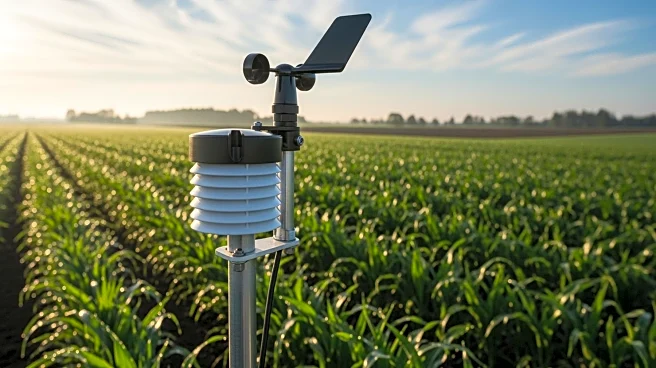
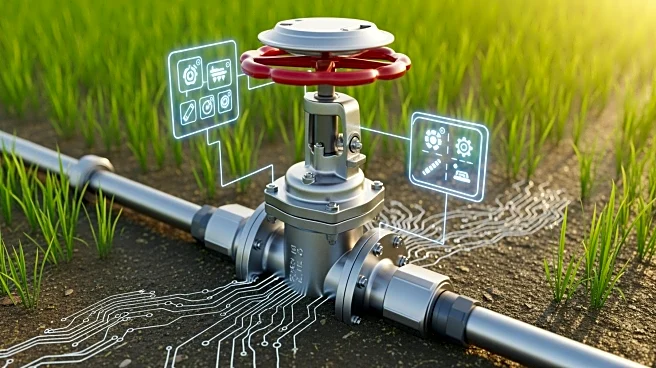
systems. Historically reliant on manual monitoring and field inspections, NIA is shifting towards a data-driven model to enhance efficiency and responsiveness. This modernization effort is led by NIA administrator Eddie Guillen, who emphasizes the need for better data and faster coordination in response to climate variability and aging infrastructure. The initiative includes centralized monitoring systems and AI-assisted weather forecasting to anticipate and manage water resources more effectively. This approach aims to provide more reliable water delivery and quicker problem-solving for farmers, improving communication and planning, especially during adverse weather conditions.
Why It's Important?
The modernization of irrigation systems by NIA is crucial for enhancing agricultural productivity and sustainability in the Philippines. By adopting digital tools and AI, NIA aims to improve water management, which is vital for food security and climate resilience. The initiative supports national objectives by ensuring that irrigation investments remain effective despite environmental challenges. For farmers, this means more predictable water supply and reduced risks during planting and harvesting seasons. The use of technology also strengthens governance within NIA, promoting transparency and accountability through standardized data collection and reporting. This transformation not only addresses immediate operational needs but also aligns with long-term climate adaptation goals, ensuring the sustainability of irrigation infrastructure.
What's Next?
As NIA continues its digital transformation in 2026, the agency plans to expand centralized monitoring and refine the use of advanced analytics. The focus will be on integrating technology with climate resilience and irrigation operations to create a more reliable and farmer-centered system. NIA aims to protect infrastructure, support farmers, and secure the food supply by keeping pace with future challenges. The ongoing efforts will involve strengthening the integration between technology and operational practices, ensuring that irrigation systems are functional, durable, and responsive to real-world conditions. This forward-looking approach is expected to enhance the overall effectiveness of irrigation services in the Philippines.