






What's Happening?
Nomura, a financial services group, has issued a warning that a complete U.S. blockade of the Strait of Hormuz could result in a significant reduction in global oil supply, potentially cutting off an additional 2.3 million barrels per day (bpd). This
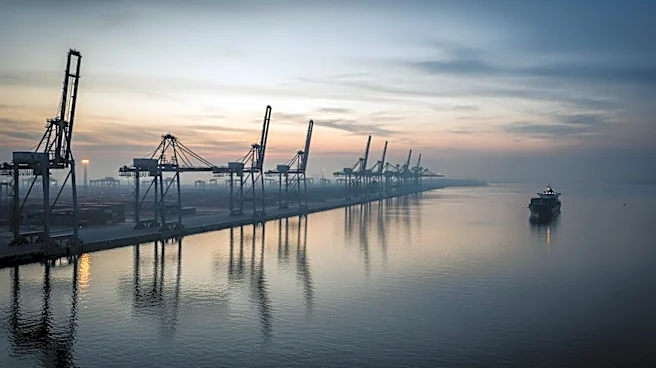
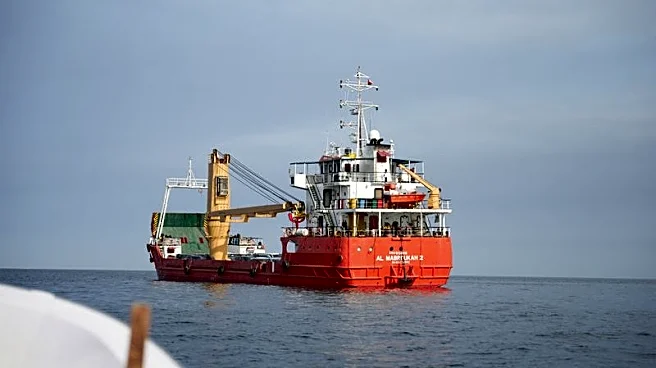
chokepoint is crucial as it previously handled 20% of the world's daily oil and gas flows. Despite the blockade, India has managed to negotiate the safe passage of several liquefied petroleum gas (LPG) tankers through the strait, and has resumed importing Iranian crude oil after a seven-year hiatus. The U.S. has allowed these imports as part of a broader strategy to manage energy supplies amid ongoing Middle Eastern conflicts.
Why It's Important?
The potential blockade of the Strait of Hormuz by the U.S. could have far-reaching implications for global energy markets, particularly affecting countries heavily reliant on Middle Eastern oil. The disruption could exacerbate existing supply chain issues, leading to increased energy costs worldwide. For India, the ability to secure LPG supplies is critical, given its widespread use for cooking. The situation underscores the geopolitical complexities of energy security and the delicate balance countries must maintain to ensure stable energy supplies. The U.S. strategy to allow Iranian oil imports reflects a pragmatic approach to mitigate potential shortages and stabilize global oil prices.
What's Next?
If the blockade continues, oil prices are expected to remain high, with Goldman Sachs predicting Brent Crude prices could average above $100 per barrel. The recovery of oil and gas supplies from the Middle East could take several months, even if the strait reopens without restrictions. Countries like India may continue to seek alternative energy sources and negotiate safe passages to mitigate the impact of the blockade. The situation remains fluid, with potential diplomatic and economic repercussions as stakeholders navigate the complexities of global energy supply chains.