






What's Happening?
African nations are being urged to bolster domestic financing, expand local manufacturing of essential health products, and enhance regional cooperation to accelerate malaria elimination. This call comes amidst a reported decline in international support
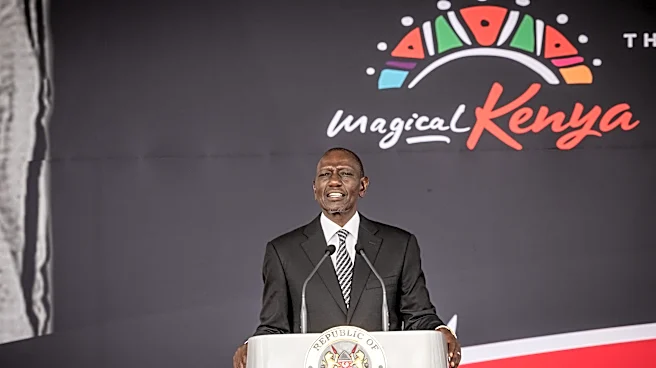
for these efforts. During the High-Level Dialogue on Malaria Elimination in Gaborone, Botswana, Kenya's Cabinet Secretary for Health, Hon. Aden Duale, represented President William Ruto. Secretary Duale emphasized the need for African governments to translate political commitments into tangible actions through sustained investment in malaria prevention, diagnosis, and treatment. He warned that a reduction in external financing poses a threat to the progress made across the continent and highlighted the importance of greater African ownership in malaria elimination initiatives. Kenya has reported significant progress, with a 34 percent reduction in confirmed malaria cases, dropping from 5.54 million in 2023 to 3.64 million in the year ending.
Why It's Important?
This initiative is crucial for public health across Africa, as malaria continues to be a significant cause of morbidity and mortality. The call for increased domestic financing and local manufacturing signals a strategic shift towards greater self-reliance in healthcare, reducing dependence on external aid which can be unpredictable. For the U.S. and other international partners, this development could influence foreign aid strategies and global health diplomacy, potentially shifting focus towards capacity building and technical assistance rather than direct financial contributions for certain health programs. A stronger, self-sufficient African healthcare system would also reduce the burden on international humanitarian efforts during health crises. The success of such an approach could serve as a model for other regions facing similar health challenges and funding constraints, demonstrating the effectiveness of localized solutions and regional cooperation.
What's Next?
Following this high-level dialogue, African nations are expected to develop and implement national strategies that align with the call for increased domestic investment and regional collaboration in malaria elimination. This may involve policy reforms to prioritize health spending, incentives for local pharmaceutical manufacturing, and the establishment of stronger cross-border health initiatives. International organizations and donor countries will likely monitor these developments closely, potentially adjusting their engagement strategies to support these new African-led approaches. There could also be increased pressure on African leaders to demonstrate concrete progress in allocating resources and achieving measurable outcomes in malaria control. Future discussions may focus on specific mechanisms for regional funding pools and technology transfer to facilitate local production of anti-malarial drugs and diagnostics.
Beyond the Headlines
The push for greater African ownership in malaria elimination extends beyond immediate health outcomes; it represents a broader movement towards continental self-determination and economic empowerment. By reducing reliance on external funding and fostering local manufacturing, African nations can strengthen their industrial base, create jobs, and build sustainable healthcare infrastructure. This shift could also lead to greater innovation tailored to local contexts, as African researchers and manufacturers address specific regional challenges. Furthermore, it highlights a growing recognition that health security is intrinsically linked to economic stability and national sovereignty. The success of this initiative could inspire similar efforts in other sectors, fostering a more resilient and independent Africa on the global stage, potentially altering long-standing dynamics of international aid and development.