






What's Happening?
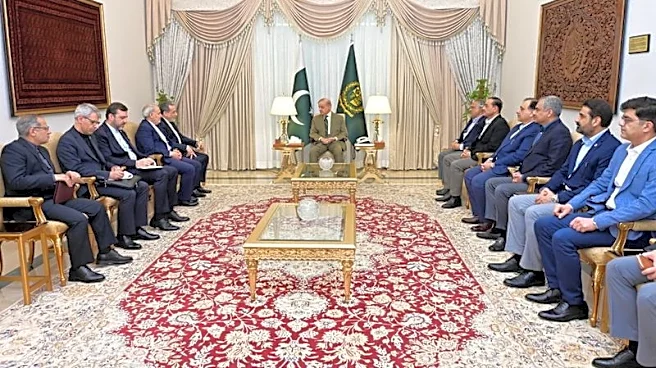
Negotiations in Pakistan involving Iran have been put on hold following the departure of Iran's top diplomat from Islamabad. The talks were intended to build on previous discussions between the United States and Iran. However, the absence of U.S. envoys
has raised questions about the future of these negotiations. Iranian officials have expressed skepticism about the U.S.'s intentions, particularly after American forces initiated blockades on Iranian ports. This move was a response to Iran's control over the strategic Strait of Hormuz, a critical passage for global oil shipments. The situation underscores the ongoing tensions between the U.S. and Iran, which have been exacerbated by military actions and geopolitical maneuvers in the region.
Why It's Important?
The stalled talks highlight the fragile state of U.S.-Iran relations and the broader geopolitical implications in the Middle East. The Strait of Hormuz is a vital chokepoint for the global oil supply, and any disruption can have significant economic repercussions worldwide. The absence of U.S. envoys at the talks may signal a lack of diplomatic engagement, potentially escalating tensions further. This situation could impact global oil prices and contribute to regional instability. Additionally, the strained relations between the U.S. and Iran could affect international efforts to address nuclear proliferation and regional security issues.
What's Next?
The future of the negotiations remains uncertain, with potential consequences for regional stability and international diplomatic efforts. Stakeholders, including other Middle Eastern countries and global powers, may need to intervene to mediate and prevent further escalation. The U.S. and Iran might explore alternative diplomatic channels to address their differences, but the path forward is unclear. The international community will likely monitor the situation closely, given its potential impact on global energy markets and regional security dynamics.