





What's Happening?
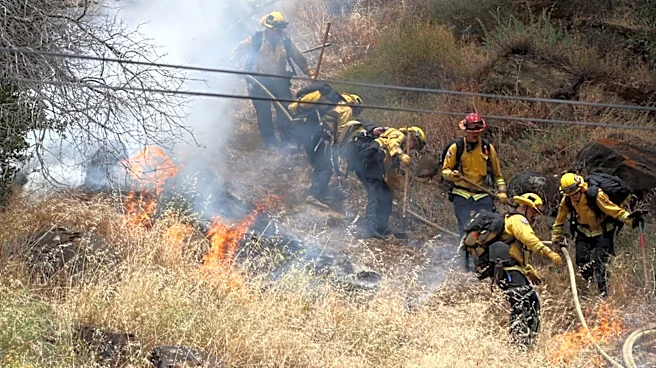
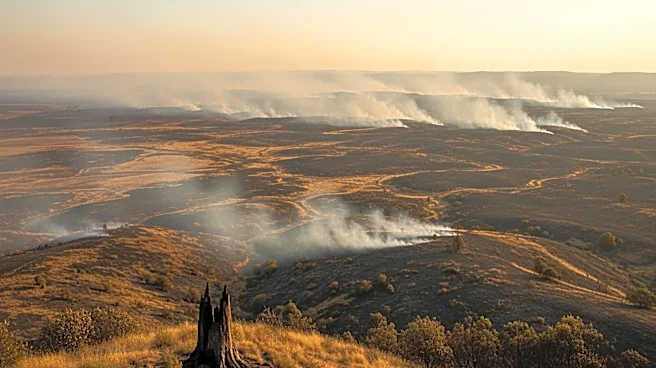
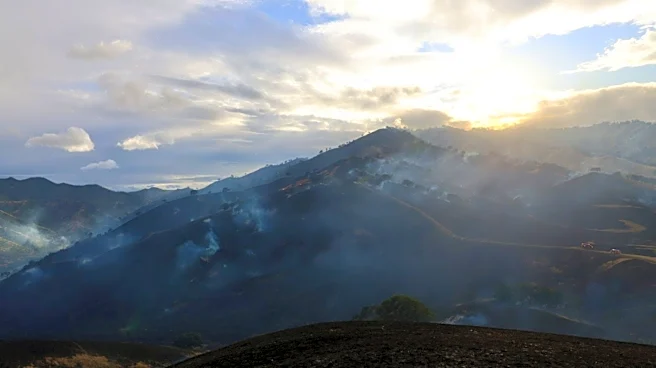
A wildfire known as the Putah Fire has burned more than 800 acres near Winters in Yolo County, California. The fire originated from an escaped controlled burn, highlighting the risks associated with such fire management practices. Firefighters are actively
working to contain the blaze, which has raised concerns about the effectiveness and safety of controlled burns in preventing larger wildfires. The incident underscores the challenges faced by fire management teams in balancing fire prevention with the potential for unintended consequences.
Why It's Important?
The Putah Fire incident is significant as it raises questions about the safety and management of controlled burns, a common practice used to reduce wildfire risks by eliminating excess vegetation. This event may lead to increased scrutiny and potential policy changes regarding fire management strategies in California and other fire-prone areas. The fire's impact on local communities, including potential evacuations and property damage, highlights the ongoing threat of wildfires in the region. It also emphasizes the need for improved fire prevention and response strategies to protect lives and property.
What's Next?
In the aftermath of the Putah Fire, there may be calls for a review of controlled burn practices and their regulations. Fire management agencies could face pressure to implement stricter guidelines and oversight to prevent similar incidents. Additionally, local authorities might increase public awareness campaigns about fire safety and preparedness. The incident could also prompt discussions on investing in advanced firefighting technologies and resources to enhance response capabilities.
Beyond the Headlines
The Putah Fire incident may have broader implications for environmental policy and land management practices. It could lead to a reevaluation of how controlled burns are conducted and monitored, potentially influencing future legislation. The event also highlights the delicate balance between using fire as a tool for ecological management and the risks it poses to communities. This could spark debates on alternative methods for wildfire prevention and the role of climate change in exacerbating fire risks.