




What's Happening?
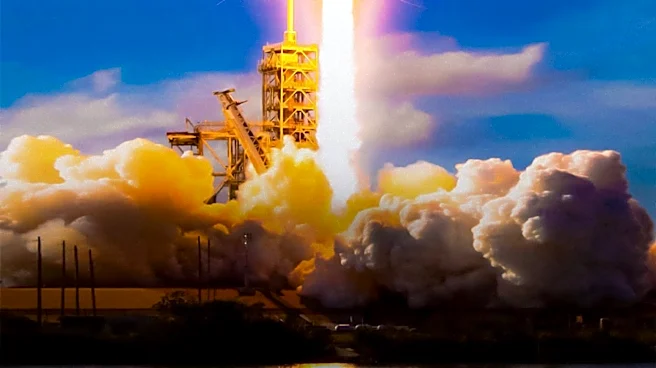
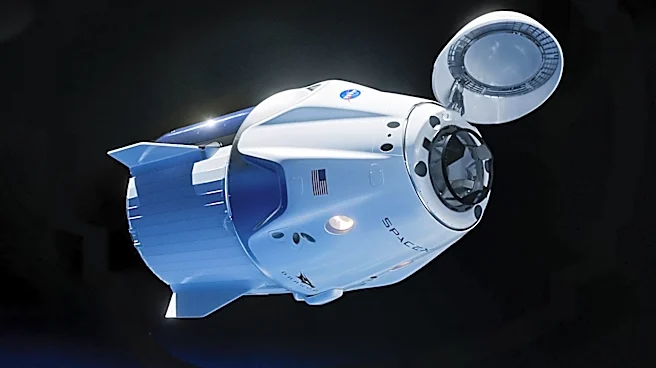
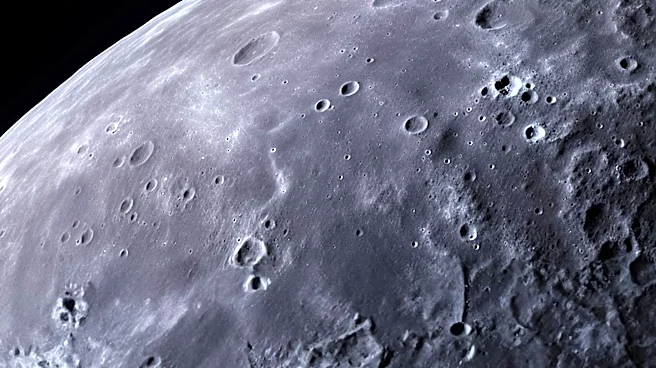
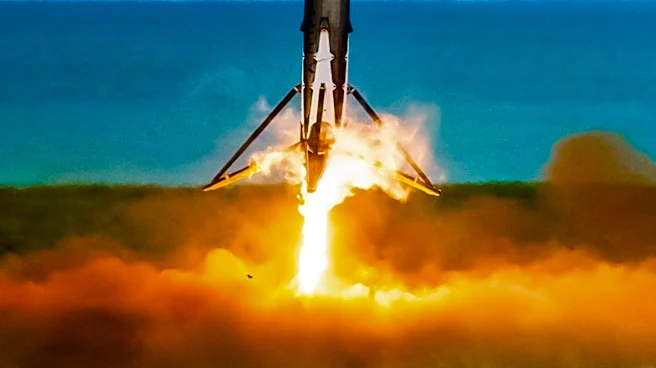
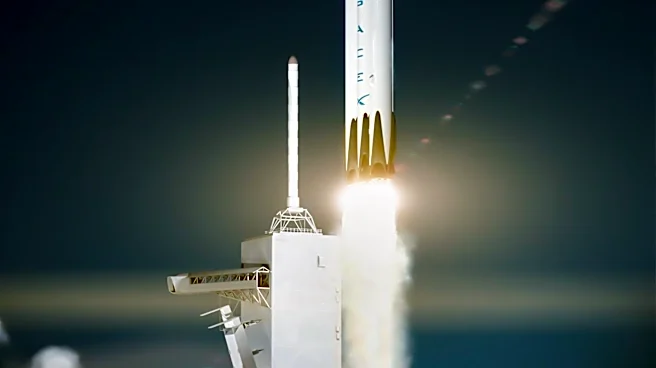
On August 5, a SpaceX Falcon 9 upper stage is scheduled to impact the Moon near Einstein Crater. This event marks a rare occurrence of a human-made object striking the lunar surface. The upper stage, catalogued as 2025-010D, was initially launched in January
2025 to deliver two private lunar landers. However, it remained in a highly elongated orbit due to the trans-lunar injection required for the mission. Over time, the Moon's gravity altered its trajectory, leading to the impending collision. The impact is expected to release significant energy, equivalent to three tons of TNT, and could provide valuable scientific data. A coordinated observation campaign involving professional and amateur astronomers is underway to capture the event.
Why It's Important?
This impact presents a unique opportunity for scientific observation and study. The event could offer insights into the behavior of human-made objects in space and their interactions with celestial bodies. The data collected may enhance understanding of lunar surface composition and impact dynamics. Additionally, the event highlights the growing need for governance in cislunar space, as commercial and governmental activities increase. The lack of regulatory frameworks for space debris in this region poses potential risks to future missions. The impact underscores the importance of developing responsible disposal practices for space missions to prevent long-term hazards.
What's Next?
Following the impact, scientists will analyze the data collected to assess the effects on the lunar surface and the resulting ejecta plume. Observations from ground-based telescopes and lunar orbiters will contribute to a better understanding of impact processes. The event may also prompt discussions on international regulations for space debris management, particularly in cislunar space. As commercial lunar activities expand, establishing guidelines for responsible mission planning and debris mitigation will become increasingly critical to ensure the safety and sustainability of space operations.
Beyond the Headlines
The upcoming impact raises questions about the long-term implications of space debris in cislunar space. As the commercial space industry grows, the potential for debris-related incidents increases, necessitating proactive measures to address these challenges. The event also highlights the collaborative efforts between public and private sectors in advancing space exploration and research. The involvement of citizen scientists and amateur astronomers in the observation campaign demonstrates the democratization of space science and the potential for broader public engagement in scientific endeavors.