





What's Happening?
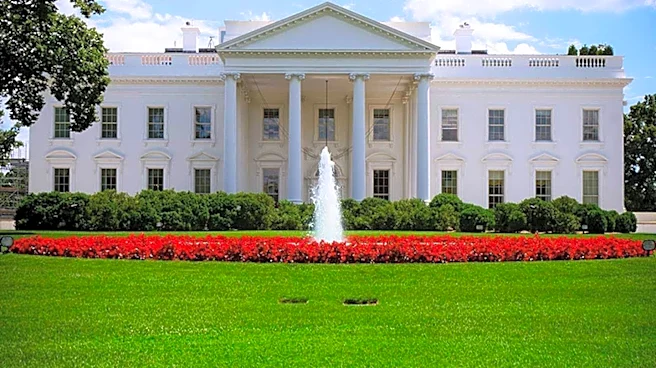
The White House has sent a series of nominations and withdrawals to the Senate for various key positions. These nominations include individuals for ambassadorships, federal judgeships, and leadership roles within government agencies. Among the notable
nominations are Jeffrey Colyer, of Kansas, to be Ambassador to the United Arab Emirates; Cynthia Kierscht, of Minnesota, to be Ambassador to the Republic of Senegal and concurrently to the Republic of Guinea-Bissau; and Michael LoSapio, of New Jersey, to be Director of the Cybersecurity and Infrastructure Security Agency (CISA) within the Department of Homeland Security. Other nominations include federal district judges, associate judges for the Superior Court of the District of Columbia, and assistant secretaries for various departments such as Energy, Justice, and Transportation. The White House also announced one withdrawal: David MacNeil, of Florida, to be a Federal Trade Commissioner.
Why It's Important?
These nominations are crucial for ensuring the continuity and effective functioning of the U.S. government, both domestically and internationally. The appointment of ambassadors is vital for maintaining diplomatic relations and advancing U.S. foreign policy objectives in key regions like the Middle East and Africa. Judicial appointments, particularly to federal district courts, have long-term implications for the interpretation and application of law across the country. The nomination of a new Director for CISA is especially significant given the increasing threats in cybersecurity and infrastructure security, directly impacting national security and economic stability. The Senate's role in confirming these nominees is a critical aspect of the checks and balances system, allowing for scrutiny of candidates' qualifications and suitability for public service. Delays or rejections in the confirmation process can lead to vacancies and hinder the administration's ability to implement its agenda.
What's Next?
The nominations sent to the Senate will now undergo a rigorous confirmation process. This typically involves committee hearings where nominees are questioned on their qualifications, policy views, and past conduct. Following committee approval, the nominations will proceed to a full Senate vote. The pace and outcome of these confirmations can be influenced by the political climate, the nominees' backgrounds, and the priorities of the Senate leadership. Some nominations, particularly those for high-profile positions or those facing significant opposition, may experience delays or even be withdrawn. The withdrawal of David MacNeil's nomination for a Federal Trade Commissioner position indicates that the administration may adjust its selections based on various factors, including Senate feedback or internal considerations.
Beyond the Headlines
The process of presidential nominations and Senate confirmations is a fundamental aspect of American governance, reflecting the interplay between the executive and legislative branches. Beyond the immediate impact of filling specific roles, these appointments shape the long-term direction of U.S. policy, legal precedent, and international relations. The selection of individuals for ambassadorships, for instance, can signal shifts in diplomatic priorities or approaches to specific countries. Similarly, judicial appointments can influence the ideological balance of the courts for decades. The increasing scrutiny and politicization of nominations in recent years highlight the growing importance of these appointments in the broader political struggle. The ability of an administration to successfully staff key positions is often seen as a measure of its effectiveness and its capacity to govern.