

What's Happening?
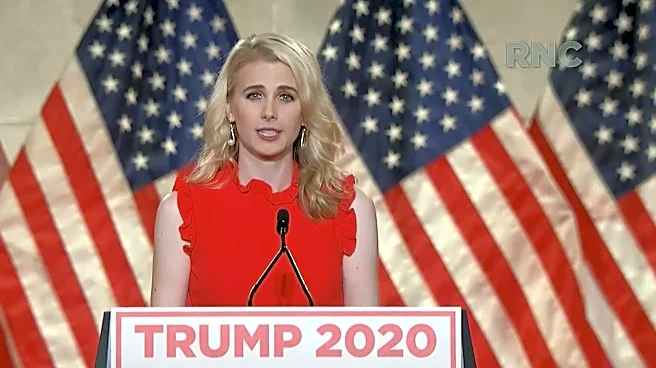
Natalie Harp, an aide to President Trump, has garnered significant media attention, being dubbed the 'human printer' due to her role in carrying a portable machine to print documents for him. However, this title is reported to underestimate her actual
influence. Harp functions as a gatekeeper, controlling the information reaching President Trump and often directing him towards right-wing content on social media. She is also one of the few individuals with direct access to President Trump's Truth Social account, where she types out his posts as he dictates them, including his characteristic use of capital letters. Her constant presence by President Trump's side, from the Oval Office to Marine One and the presidential jet, highlights her perceived invaluable role. President Trump has reportedly stated that Harp will 'never leave' him, suggesting a deep loyalty. Her loyalty has been noted, with reports of her writing notes to President Trump expressing her devotion and even riding in the trunk of an SUV to accompany him on a trip when no other space was available. The White House has defended her role, with spokesman Davis Ingle stating she is 'one of the most loyal and hardest-working aides on President Trump’s team.'
Why It's Important?
Natalie Harp's significant access and influence over President Trump are important because they suggest a concentrated channel for information and communication within his inner circle. Her role as a 'gatekeeper' means she can shape the narrative and content President Trump consumes and, by extension, the information he disseminates through his Truth Social account. This level of control over information flow can have substantial implications for policy decisions, public statements, and the overall direction of the administration. The reports of her directing President Trump towards right-wing social media material indicate a potential for reinforcing specific ideological viewpoints, which could further polarize political discourse. Her direct access to President Trump's social media platform also means she plays a crucial role in crafting his public image and messaging, impacting how his statements are perceived by the public and the media. The White House's strong defense of her position underscores the perceived value of her loyalty and work ethic within the administration, highlighting the importance of personal relationships and trust in high-level political operations.
What's Next?
The continued scrutiny of Natalie Harp's role suggests that her influence and access to President Trump will remain a topic of media and political discussion. As a key figure in controlling information flow and managing President Trump's public communications, any future actions or statements attributed to her, or any perceived shifts in her access, could draw significant attention. The White House's defense of her role indicates a commitment to maintaining her position, but external pressures and criticisms from political opponents, such as Jon Ossoff, may continue. Her past actions, such as riding in an SUV trunk to accompany President Trump, demonstrate a high level of dedication, which could be further tested in future political or administrative contexts. The ongoing focus on her involvement in President Trump's social media presence means that her contributions to his online messaging will likely be closely monitored for their impact on public opinion and political narratives.
Beyond the Headlines
Beyond the immediate political implications, Natalie Harp's story touches on deeper themes of loyalty, influence, and the dynamics of power within political leadership. Her unwavering devotion to President Trump, reportedly stemming from a belief that his policies saved her life during a battle with bone cancer, highlights the personal and emotional dimensions that can shape political allegiances. This personal connection, rather than purely professional qualifications, appears to be a significant factor in her elevated position and access. The 'human printer' moniker, while seemingly trivial, masks a more profound role in information curation and dissemination, raising questions about the nature of information control in modern political campaigns and administrations. Her ability to filter and present information to President Trump, and to directly manage his social media output, underscores the evolving landscape of political communication, where personal aides can wield considerable power in shaping public discourse and influencing a leader's perspective. This dynamic also raises ethical considerations regarding the potential for echo chambers and the selective presentation of information to those in power.