






What's Happening?
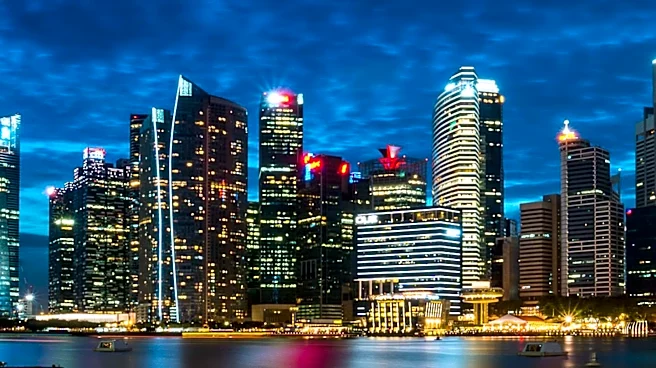
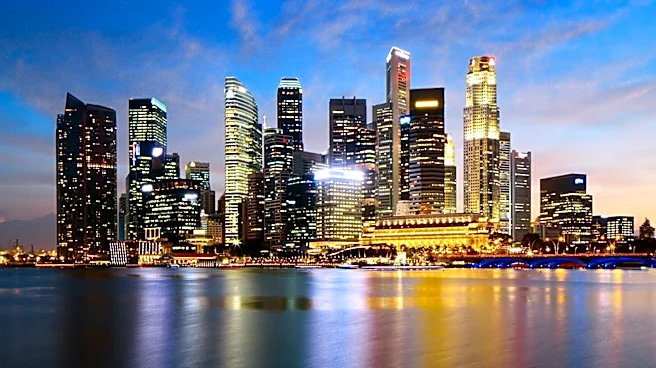
Singapore, often referred to as an 'air-conditioned nation' due to 99% of private residences having cooling units, is actively exploring and implementing alternative cooling technologies (ACTs) to reduce its significant energy consumption and carbon emissions.
The city-state's building sector contributes one-fifth of its emissions, with cooling accounting for 40-60% of a building's energy use. To combat this, Singapore is experimenting with solutions like active chilled beams and passive displacement cooling. Active chilled beams, as seen in the Paya Lebar Green building, use chilled water and air jets to cool spaces, reducing energy use by over 30% compared to conventional air conditioning. Passive displacement cooling, used at the ports authority maintenance building, leverages natural airflow and ceiling cooling coils to minimize the need for mechanical fans. A 2024 government study identified ACTs as a key strategy, potentially saving up to 48% in energy.
Why It's Important?
Singapore's aggressive pursuit of alternative cooling technologies holds significant implications for global efforts to combat climate change and for the U.S. building and HVAC industries. As global temperatures rise, the demand for cooling solutions is increasing worldwide, including in many parts of the U.S. Singapore's innovations demonstrate practical, energy-efficient alternatives to traditional air conditioning, which often relies on refrigerants with high global warming potential and consumes vast amounts of electricity, frequently generated from fossil fuels. The success of ACTs in Singapore could inspire U.S. developers, architects, and policymakers to adopt similar sustainable building practices, leading to reduced energy costs, lower carbon footprints for commercial and residential buildings, and new market opportunities for companies specializing in green building technologies. This shift could also influence U.S. building codes and energy efficiency standards, pushing for more sustainable construction and retrofitting projects.
What's Next?
By mid-2026, at least 33 public and 14 private buildings in Singapore had adopted ACTs, a number expected to grow as the city-state works towards its ambitious goal of achieving net-zero carbon emissions by 2050. While ACTs currently have higher installation costs than conventional systems, proponents argue that long-term energy savings make them more cost-effective. The challenge remains in shifting public mindset, as many are accustomed to traditional air conditioning. Hybrid cooling, combining higher air conditioning temperatures with fans, is currently the most popular alternative. Experts like Wan Man Pun from Nanyang Technological University suggest that future ACTs will incorporate more sophisticated controls, including predictive systems. However, the search continues for alternative cooling methods with higher efficiency than vapor compression, indicating ongoing research and development in this critical area.
Beyond the Headlines
The drive for innovative cooling solutions in Singapore highlights a broader global challenge: how to maintain comfort and productivity in increasingly hot climates without exacerbating climate change. This issue has ethical dimensions, as access to cooling becomes a matter of public health and equity, particularly for vulnerable populations. Legally, it could lead to new regulations and incentives for green building technologies. Culturally, it may necessitate a shift in societal expectations regarding indoor temperatures and comfort, moving away from energy-intensive cooling towards more sustainable practices. The long-term implications include a potential transformation of urban landscapes, with buildings designed to integrate natural ventilation and advanced cooling systems, ultimately contributing to more resilient and environmentally friendly cities worldwide.