





What's Happening?
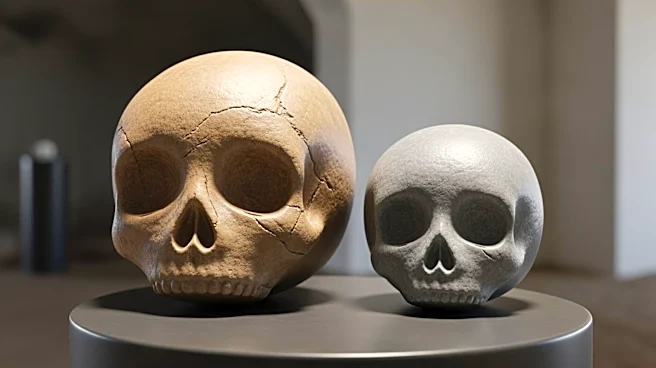
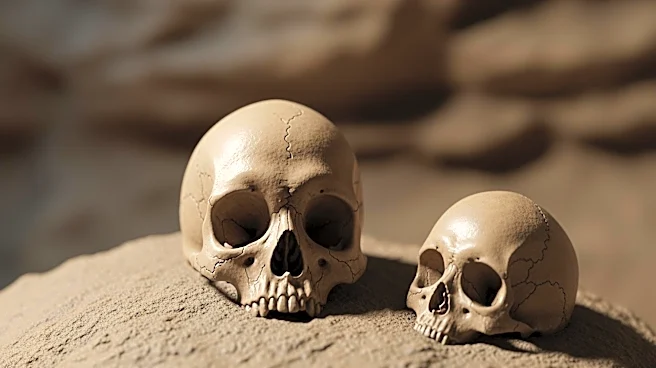
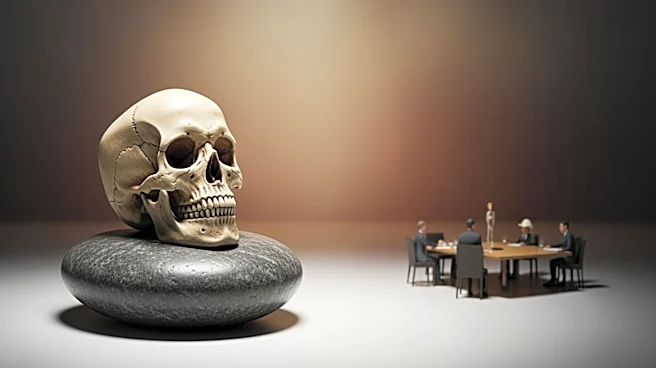
A skull previously thought to be a rare Neanderthal-human hybrid has been reclassified as fully consistent with modern human anatomy. The 7,500-year-old Hahnöfersand skull from Germany, once considered a missing link in human evolution, has been re-evaluated
using advanced morphometric techniques. This new analysis, published in Scientific Reports, shows that the skull aligns with modern human variation, challenging previous assumptions about interbreeding between Neanderthals and early modern humans. The skull, initially believed to be much older, has been dated to the Mesolithic period, a time when only modern humans inhabited Europe.
Why It's Important?
This reclassification has significant implications for the study of human evolution. It challenges long-standing narratives about the extent of interbreeding between Neanderthals and modern humans. The findings highlight the importance of using advanced analytical techniques to reassess historical interpretations based on limited data. By placing the Hahnöfersand skull within the spectrum of Homo sapiens, the study underscores the complexity of human variation and the potential for misinterpretation when context is incomplete. This development may prompt a re-evaluation of other fossils previously thought to represent hybridization.