








What's Happening?
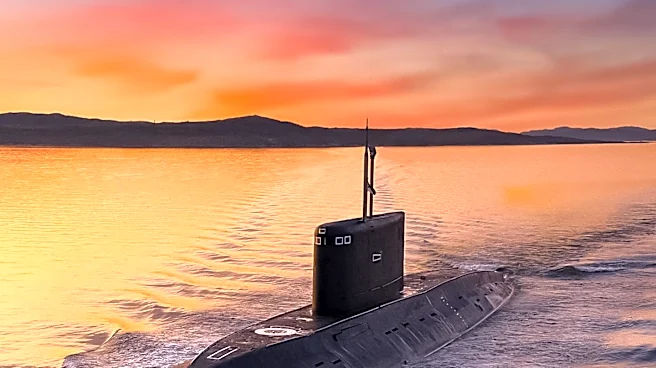
On July 28, 2026, Russia's Sevmash shipyard launched the nuclear-powered cruise missile submarine Ulyanovsk, marking the completion of its hull-construction phase. The Ulyanovsk is part of the Yasen-M-class, a series of multipurpose nuclear-powered submarines
designed to replace older classes in the Russian Navy. The submarine will undergo mooring trials, sea trials, and state acceptance trials before its expected delivery in December 2027. The launch ceremony was attended by senior Russian government, navy, and industry officials, including Deputy Prime Minister Yuri Trutnev. The Yasen-M submarines are equipped with advanced sonar and combat-management systems, quieter propulsion, and a hull design that reduces acoustic signature. They are capable of carrying Russian cruise missiles, including the Kalibr and P-800 Oniks, and are linked to the Tsirkon hypersonic missile program.
Why It's Important?
The launch of the Ulyanovsk represents a significant enhancement of Russia's naval capabilities, particularly in the Arctic and North Atlantic regions. The Yasen-M-class submarines are designed for a range of missions, including anti-submarine warfare, anti-surface warfare, land-attack strikes, and intelligence collection. Their nuclear power allows for extended operational endurance, making them a formidable presence in strategic waters. This development could impact global naval dynamics, as the enhanced capabilities of the Russian Northern Fleet may influence the balance of power in key maritime regions. The introduction of advanced missile systems like the Tsirkon hypersonic missile further underscores the strategic importance of these submarines.
What's Next?
Following the launch, the Ulyanovsk will undergo a series of trials to ensure it meets operational standards. The successful completion of these trials is crucial for its integration into the Northern Fleet. The continued construction of additional Yasen-M submarines at Sevmash indicates Russia's commitment to expanding its naval capabilities. This could prompt responses from other nations, particularly those with interests in the Arctic and North Atlantic, potentially leading to increased naval activity and strategic posturing in these regions.