







What's Happening?
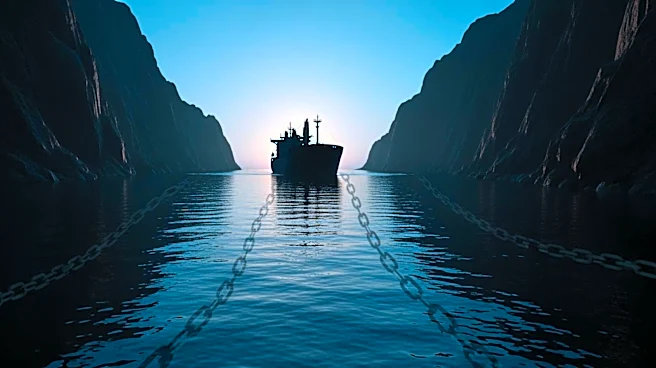
Tensions between the United States and Iran have escalated, leading to a blockade of the Strait of Hormuz by Iran and a U.S. naval blockade in the Gulf. This situation has arisen from stalled negotiations between the two countries, with the U.S. focusing
on Iran's nuclear ambitions and missile programs. Iran has signaled a willingness to negotiate on certain terms, but the blockade remains a significant point of contention. The Strait of Hormuz is a critical passage for global energy supplies, and its closure has significant implications for international trade and energy markets.
Why It's Important?
The blockade of the Strait of Hormuz is a critical issue as it affects the global energy supply chain, impacting countries that rely heavily on oil imports from the region. The situation highlights the geopolitical tensions that can disrupt global markets and the importance of diplomatic solutions to prevent economic instability. The U.S. and Iran's actions have broader implications for international relations, particularly for countries like India and China, which are major importers of Middle Eastern oil. The ongoing conflict underscores the need for strategic diplomacy to ensure the free flow of energy resources.
What's Next?
The international community, including major stakeholders like India and China, may need to intervene diplomatically to resolve the blockade and ensure stability in the region. The potential for further escalation remains if diplomatic efforts fail, which could lead to increased global economic instability. The U.S. and Iran may need to engage in more constructive dialogue to reach a resolution that addresses both parties' concerns while ensuring the security of global energy supplies.