
What's Happening?
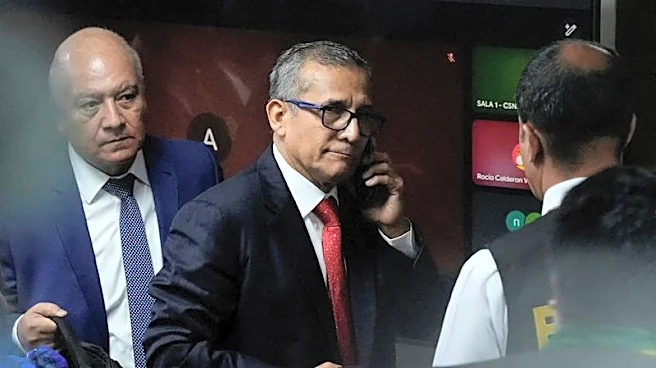
Peru's former President Ollanta Humala was released from prison on July 31, 2026, after the country's Constitutional Court overturned his 15-year sentence for money laundering. The conviction was linked
to the Odebrecht corruption scandal, a massive graft case involving the Brazilian construction group. Humala, who served as president from 2011 to 2016, was the first Peruvian ex-leader to face trial in this scandal, which has also implicated three other former presidents. Humala and his wife, Nadine Heredia, were found guilty last year of receiving illegal contributions from Odebrecht and the Venezuelan government during presidential campaigns. Heredia has sought asylum in Brazil. Upon his release, Humala claimed that he and his wife were victims of political and judicial persecution.
Why It's Important?
The release of Ollanta Humala highlights the ongoing impact of the Odebrecht scandal, which has significantly affected political landscapes across Latin America. The scandal has led to legal proceedings against numerous high-profile figures, including several former Peruvian presidents. The overturning of Humala's conviction may influence public perception of the judiciary's role in political matters and could affect future legal proceedings related to the scandal. Additionally, the decision may have implications for Peru's political climate, especially given the involvement of current political figures in similar allegations. The case underscores the challenges of addressing corruption and maintaining judicial independence in politically charged environments.
What's Next?
Following Humala's release, there may be increased scrutiny on the judicial processes involved in corruption cases in Peru. The decision could prompt calls for further investigations into the Odebrecht scandal and its impact on Peruvian politics. Political leaders and civil society groups may react to the ruling, potentially influencing upcoming elections and policy decisions. The case may also affect international relations, particularly with Brazil, where Heredia has sought asylum. Observers will likely monitor how this development influences the broader fight against corruption in the region.