



What's Happening?
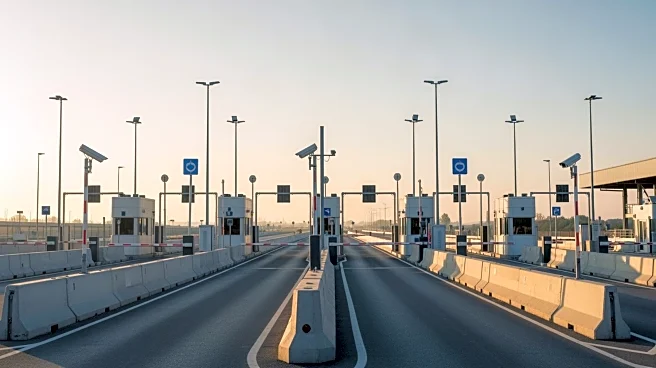
The Rafah crossing, Gaza's only external border not under Israeli control, has reopened under a limited pilot plan. Despite the reopening, the number of crossings has been significantly lower than anticipated. According to United Nations data, only 36
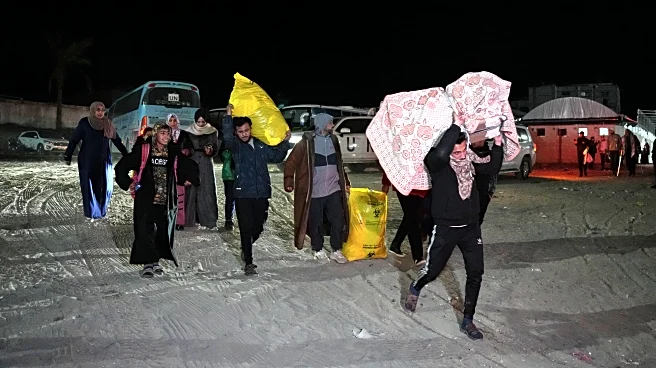
Palestinians requiring medical care, along with 62 companions, have crossed into Egypt over the first four days. The arrangement, negotiated by Israeli, Egyptian, Palestinian, and international officials, set a daily limit of 50 people returning to Gaza and 50 medical patients leaving, each with two companions. However, the actual numbers have fallen short of these limits. The crossing process has been described as arduous, with extensive screening and long processing times. Travelers have reported being subjected to hours-long questioning and having personal items confiscated. The crossing has also experienced temporary closures, adding to the confusion and delays.
Why It's Important?
The reopening of the Rafah crossing is significant as it represents a potential lifeline for Palestinians in Gaza who require medical treatment unavailable locally. However, the limited success of the reopening highlights the ongoing challenges faced by residents in accessing essential services. The strict controls and low crossing numbers underscore the broader humanitarian issues in Gaza, where approximately 20,000 people are estimated to need medical care outside the region. The situation reflects the complex political and logistical challenges in managing border crossings in conflict zones. The limited reopening also raises questions about the effectiveness of international negotiations in addressing humanitarian needs and the potential for future improvements in border management.
What's Next?
The pilot operation of the Rafah crossing is being closely monitored as a test of whether the crossing can be managed predictably and humanely. Stakeholders, including international organizations and local authorities, will likely assess the outcomes of this pilot to determine future actions. There may be calls for adjustments to the operational procedures to increase the number of crossings and improve the efficiency of the process. Additionally, the ongoing humanitarian needs in Gaza may prompt further international diplomatic efforts to address the situation. The outcome of this pilot could influence future negotiations and agreements regarding border management and humanitarian access in the region.