








What's Happening?
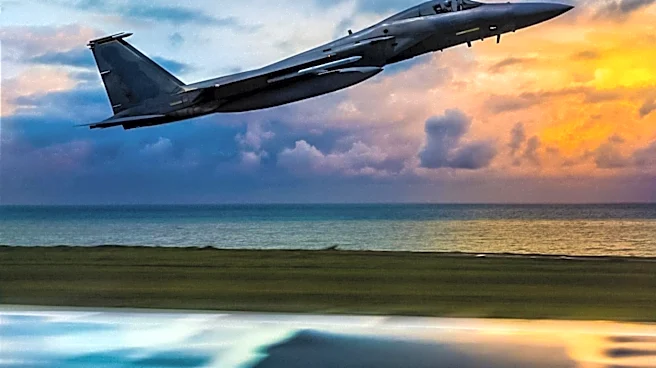
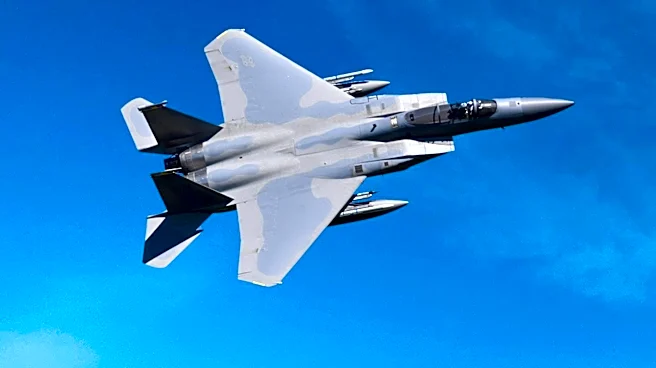
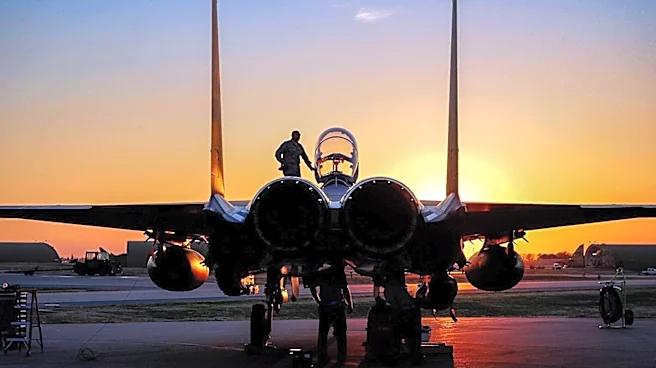
South Korea is set to upgrade its fleet of Boeing F-15K Slam Eagle fighters with the BAE Systems ALQ-250 Eagle Passive Active Warning Survivability System (EPAWSS). This advanced electronic warfare system is designed to protect the non-stealth F-15s from
modern ground-based air defenses by using electromagnetic jamming to reduce radar detection. The system provides 360-degree threat detection and countermeasures, allowing pilots to operate in hostile environments. The EPAWSS is already in production for the U.S. Air Force's F-15 fleet, and South Korea's contract with BAE Systems marks a significant enhancement for its 59 F-15K jets. This upgrade aims to improve the Republic of Korea Air Force's (ROKAF) ability to counter current and future threats while ensuring interoperability with U.S. forces.
Why It's Important?
The integration of the EPAWSS into South Korea's F-15K fleet represents a strategic enhancement of the country's defense capabilities. By equipping its aircraft with advanced electronic warfare systems, South Korea is bolstering its air superiority and combat readiness in the face of evolving threats. This move not only strengthens South Korea's national defense but also reinforces its military alliance with the United States, as interoperability with U.S. forces is a key component of the upgrade. The development underscores the importance of maintaining technological parity in military capabilities, particularly in regions with complex security dynamics.
What's Next?
Following the contract with BAE Systems, the next steps involve the implementation and testing of the EPAWSS on South Korea's F-15K fleet. This process will likely involve close collaboration between BAE Systems, Boeing, and the ROKAF to ensure the system's seamless integration and operational effectiveness. As the system is deployed, it will be crucial to monitor its performance in various operational settings to validate its capabilities and make any necessary adjustments. Additionally, the upgrade may prompt other regional powers to consider similar enhancements to their own military assets, potentially influencing the broader security landscape in East Asia.