

What's Happening?
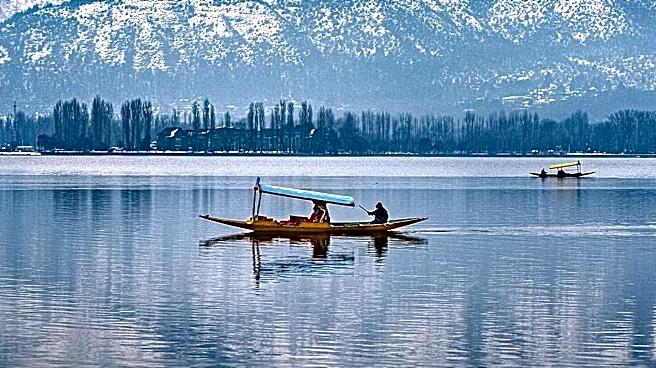
Jammu and Kashmir is bracing for fresh spells of rain and snowfall starting November 10, with an intense Western Disturbance expected to bring widespread precipitation across the Union Territory on November 12 and 13. The Meteorological Centre Srinagar
forecasts light to moderate rainfall in the plains and snowfall over higher reaches, accompanied by thunderstorms and gusty winds in isolated areas. Day temperatures are projected to fall by 6-8 degrees Celsius during this period. An initial Western Disturbance on November 10 may bring light snowfall to isolated mountainous areas, particularly in North and Central Kashmir. A more moderate Western Disturbance around November 12 is expected to cause widespread snowfall across the higher reaches of North, Central, and South Kashmir, as well as the Pir Panjal and Chenab Valley regions. Some higher-altitude areas could experience moderate snowfall.
Why It's Important?
The anticipated weather conditions carry significant implications for daily life and economic activities in Jammu and Kashmir. The projected 6-8 degree Celsius drop in day temperatures, coupled with widespread precipitation, could lead to challenging conditions for residents and travelers. Fresh snowfall is expected to disrupt traffic on crucial mountain passes and hilly roads, including Zojila, Sadhna Pass, Razdan Pass, Mughal Road, and Sinthan Top. This disruption can impact supply chains, local commerce, and the movement of essential services. Farmers have been advised to suspend harvesting activities on November 12 and 13, and to ensure the safe storage of already harvested crops, indicating a direct economic impact on the agricultural sector. The advisory for travelers and the general public to plan journeys carefully and check road conditions highlights potential safety concerns and the need for preparedness.
What's Next?
Authorities have advised travelers, tourists, transporters, and the general public to plan their journeys accordingly, check road and highway conditions before departure, and adhere to traffic advisories. Farmers are urged to suspend harvesting activities on November 12 and 13 and secure their crops. Following the precipitation, temperatures are expected to decline further, with daytime temperatures remaining 5-8 degrees Celsius below normal. The Meteorological Centre has also cautioned people, especially those traveling through higher reaches, to exercise caution due to the possibility of fresh snowfall and slippery road conditions. These advisories aim to mitigate potential risks and disruptions caused by the impending weather system.
Beyond the Headlines
The recurring impact of Western Disturbances on Jammu and Kashmir underscores the region's vulnerability to weather-related disruptions. Such events often highlight the need for robust infrastructure, effective disaster preparedness, and timely communication systems to ensure public safety and minimize economic losses. The advice to farmers to halt harvesting activities points to the delicate balance between agricultural cycles and unpredictable weather patterns, a challenge that could intensify with broader climate shifts. The consistent need for advisories regarding mountain passes also reflects the critical role these routes play in regional connectivity and the persistent challenges in maintaining them during adverse weather, impacting both local communities and strategic movements.