



What's Happening?
Allele Biotechnology & Pharmaceuticals, Inc., a San Diego-based company, has announced a partnership with the University of California, San Diego, to work on a $25.8 million project funded by the Advanced Research Projects Agency for Health (ARPA-H).
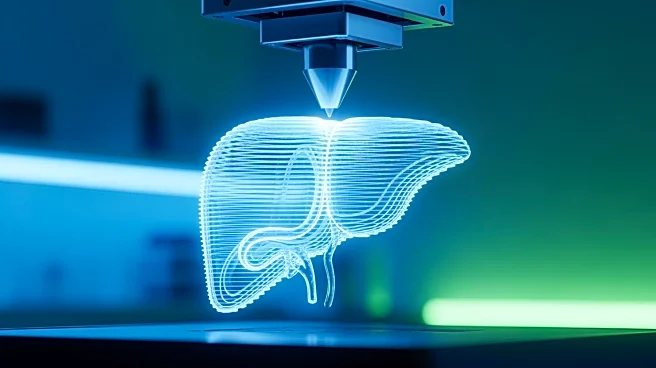
The initiative aims to develop 3D bioprinted livers for transplantation using patient-specific cells. This project is part of ARPA-H's Personalized Regenerative Immunocompetent Nanotechnology Tissue (PRINT) program, which seeks to create organs on demand without the need for immunosuppressive drugs. Allele will utilize its patented mRNA reprogramming method to produce induced pluripotent stem cells (iPSCs) and differentiate them into various liver cell types. The project is led by Shaochen Chen, Ph.D., a 3D bioprinting expert at UC San Diego, and involves specialists in liver biology, imaging, surgery, and artificial intelligence.
Why It's Important?
This collaboration could revolutionize the field of organ transplantation by providing a scalable and safe alternative to traditional methods, which rely on donor organs and require lifelong immunosuppressant drugs. The development of 'made-to-order' livers could significantly reduce the waiting list for liver transplants, potentially saving over 12,000 U.S. patients annually. Additionally, it could lower healthcare costs and improve outcomes for individuals with chronic liver disease. The success of this project could pave the way for similar advancements in other organ transplants, highlighting the potential of bioprinting technology in regenerative medicine.
What's Next?
The project is set to span 60 months, during which the team will focus on refining the bioprinting process and scaling up production to meet clinical demands. If successful, this could lead to clinical trials and eventual regulatory approval for the use of bioprinted livers in human transplants. The collaboration may also inspire further research and investment in bioprinting technologies, potentially expanding the range of organs that can be produced using this method. Stakeholders in the healthcare and biotechnology sectors will likely monitor the project's progress closely, as its success could have far-reaching implications for the future of organ transplantation.
Beyond the Headlines
The ethical implications of bioprinting organs are significant, as this technology challenges traditional notions of organ donation and transplantation. It raises questions about accessibility, cost, and the potential for commercialization of bioprinted organs. Additionally, the project underscores the importance of interdisciplinary collaboration in advancing medical technologies, as it brings together experts from various fields to tackle a complex healthcare challenge. The success of this initiative could also influence public policy and regulatory frameworks surrounding regenerative medicine and bioprinting.