





What's Happening?
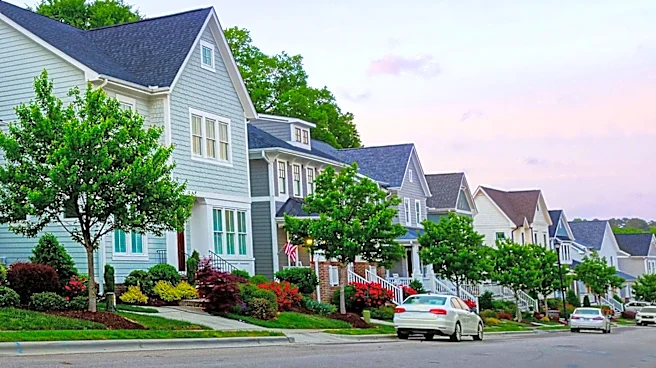
As summer temperatures rise, homeowners across the U.S. are experiencing increased financial stress due to soaring electricity bills. A recent survey by SupplyHouse reveals that 77% of homeowners are feeling the pinch, with many cutting back on dining
out, shopping, and even groceries to manage costs. In response, homeowners are exploring various strategies to stay cool without incurring high expenses. These include using fans instead of HVAC systems, adjusting thermostats to higher temperatures, delaying the use of air conditioning, and avoiding heat-generating appliances during peak hours. Experts suggest that while some methods, like using fans and setting thermostats higher, can be effective, others, such as closing vents, may backfire by increasing energy costs.
Why It's Important?
The rising cost of electricity is a significant concern for U.S. homeowners, impacting household budgets and prompting lifestyle changes. As energy prices continue to climb, largely due to increased demand and infrastructure expansion, consumers are forced to find innovative ways to reduce their energy consumption. This situation highlights the broader issue of energy affordability and the need for sustainable solutions to manage electricity demand. The financial strain on households could lead to increased pressure on policymakers to address energy pricing and efficiency standards, potentially influencing future energy policies and regulations.
What's Next?
Homeowners are likely to continue seeking energy-efficient solutions and may increasingly turn to renewable energy sources or energy-saving technologies to mitigate costs. Policymakers may face growing demands to implement measures that address energy affordability and efficiency. This could include incentives for energy-efficient appliances, support for renewable energy adoption, and regulations to ensure fair pricing. The ongoing dialogue between consumers, energy providers, and regulators will be crucial in shaping the future of energy consumption and pricing in the U.S.