


What's Happening?
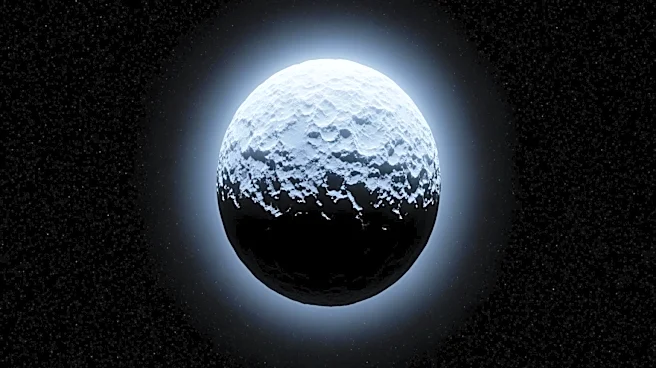
The origin of the Moon remains a significant mystery in planetary science. Researchers agree that the Moon formed from debris following a collision between Earth and a celestial body named Theia approximately 4.51 billion years ago. However, the chemical
similarity between the Moon and Earth challenges existing models, which predict the Moon should primarily consist of material from Theia. Recent studies aim to recreate lunar conditions in laboratories to better understand the Moon's formation and its striking resemblance to Earth.
Why It's Important?
Understanding the Moon's origin is crucial for comprehending the history of our solar system and Earth's development. The chemical similarity between the Moon and Earth suggests a more complex formation process than previously thought. Resolving this mystery could provide insights into planetary formation and the early solar system's dynamics. This research also highlights the interconnectedness of Earth and its satellite, offering a deeper understanding of their shared history.
Beyond the Headlines
The ongoing research into the Moon's origin may lead to new theories about planetary collisions and material exchange in the early solar system. It also raises questions about the potential for similar processes on other planets and moons, influencing our search for extraterrestrial life and understanding of planetary systems beyond our own.