







What's Happening?
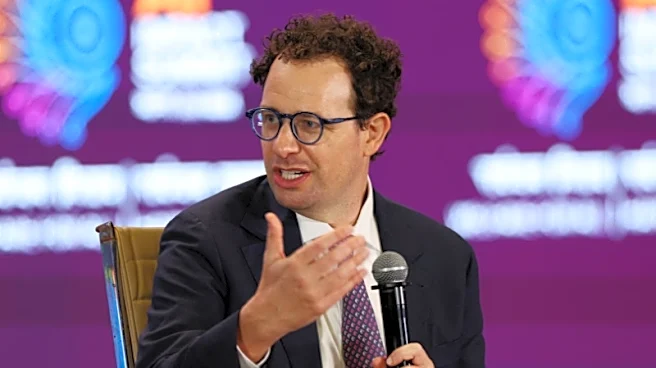
Sam Altman, CEO of OpenAI, has reiterated his concerns about the rapid advancement of artificial intelligence (AI), warning of two significant risks: humanity losing control over increasingly capable AI systems and the concentration of AI power in too
few hands. Altman emphasized that the world needs assurance that American companies developing advanced AI will act responsibly, especially as the pace of progress accelerates. He stressed the importance of ensuring that safety and alignment techniques keep pace with or even outpace the capabilities of AI models. Altman's statements align with those of Dario Amodei, CEO of Anthropic, who also called for a slower development pace for advanced AI models. Altman advocated for a federal regulatory framework in the United States to establish common safety requirements for frontier AI and supported the inclusion of independent auditors to oversee the risks of advanced systems.
Why It's Important?
Sam Altman's repeated warnings and calls for regulation from a leading figure in the AI industry highlight a critical juncture in technological development. His concerns about losing control over AI systems and the concentration of power underscore the potential for profound societal and economic disruption in the U.S. and globally. If AI development proceeds unchecked, it could lead to job displacement, ethical dilemmas, and even national security vulnerabilities. The emphasis on a federal regulatory framework and independent audits suggests a growing recognition within the tech sector that self-regulation alone may be insufficient to manage the risks. This could pave the way for significant policy changes in the U.S., impacting how AI research and deployment are conducted, potentially fostering a more responsible and secure AI ecosystem. The collaboration and shared concerns between major AI developers like OpenAI and Anthropic also signal a collective industry push for a more cautious approach.
What's Next?
Following Sam Altman's warnings, there is likely to be increased pressure on the U.S. government to develop and implement a federal regulatory framework for artificial intelligence. This framework could include mandates for safety requirements, independent audits, and guidelines for responsible AI development. The collaboration between AI companies, as suggested by Altman's agreement with Dario Amodei, might lead to industry-wide best practices and standards, even in the absence of immediate government regulation. Furthermore, Altman's call for international coordination on security policies indicates a potential push for global dialogues and agreements on AI governance, which the U.S. government would be expected to facilitate. Businesses developing AI will need to anticipate and adapt to these evolving regulatory landscapes and ethical considerations, potentially investing more in safety research and compliance measures.
Beyond the Headlines
The deeper implications of Sam Altman's warnings extend to the fundamental question of humanity's relationship with advanced technology. His concern about losing control over AI systems touches upon the philosophical and existential challenges of creating intelligence that could surpass human comprehension and decision-making. This raises ethical questions about accountability, autonomy, and the very definition of human agency in an AI-driven future. The risk of power concentration in AI also has significant societal implications, potentially exacerbating existing inequalities if access and control of advanced AI are limited to a select few. This could lead to new forms of digital divides and influence disparities. Altman's emphasis on the "Team Humanity" perspective suggests a moral imperative for AI development to prioritize human well-being and societal benefit, prompting a broader cultural conversation about the values embedded in our technological advancements.