







What's Happening?
The American Kennel Club (AKC) has provided a comprehensive overview of the Portuguese Water Dog's history, tracing its origins from a working dog along Portugal's coast to its establishment as a recognized breed in the United States. The breed was historically
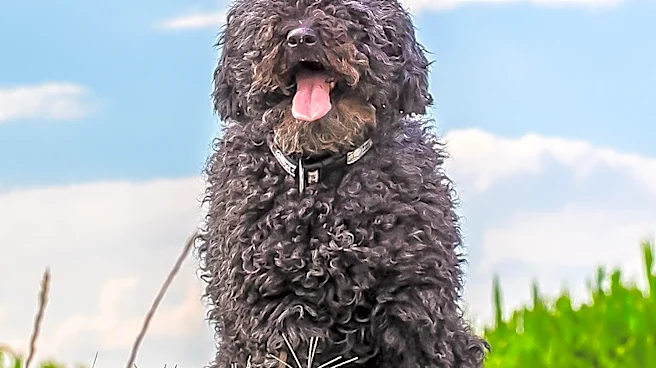
vital to fishermen, assisting with tasks such as herding fish, retrieving gear, and carrying messages between boats. Theories regarding its ancient origins suggest connections to various working dogs brought to the Iberian Peninsula by invading groups like the Romans, Visigoths, and Moors, or migrations from regions near present-day Russia and China. The breed faced near extinction in the early 20th century but was preserved through the efforts of Portuguese shipping magnate Vasco Bensaude. Its introduction to the U.S. began with dedicated enthusiasts, notably Mr. and Mrs. Herbert Miller, who imported breeding stock and established the first litter of Portuguese Water Dogs of Portuguese breeding in the U.S. in 1971. This led to the formation of the Portuguese Water Dog Club of America in 1972, and the breed gained full AKC registration in the Working Group in 1984. The breed gained significant public attention when President Barack Obama's family welcomed 'Bo' and later 'Sunny,' both Portuguese Water Dogs, to the White House.
Why It's Important?
The AKC's detailed account highlights the significant role of dedicated breeders and enthusiasts in preserving and establishing dog breeds, both internationally and within the United States. The story of the Portuguese Water Dog underscores the cultural and historical value of working dog breeds, demonstrating their adaptability from demanding maritime tasks to becoming beloved family companions and participants in various performance sports. The breed's journey from near extinction to AKC recognition illustrates the impact of preservation efforts on maintaining genetic diversity and historical lineages within the canine world. Furthermore, the breed's presence in the White House during President Obama's tenure significantly elevated its public profile, potentially influencing breed popularity and responsible ownership practices. This narrative also showcases the rigorous process of breed recognition by organizations like the AKC, which involves establishing breed standards, forming dedicated clubs, and ensuring a stable breeding population.
What's Next?
The continued recognition and promotion by organizations like the AKC suggest that the Portuguese Water Dog will maintain its status as a popular and versatile breed. Enthusiasts and breeders are likely to continue participating in AKC-sanctioned events such as agility, obedience, tracking, and rally, further showcasing the breed's intelligence and athleticism. The breed's inherent qualities, including its webbed feet and waterproof, low-shedding coat, will continue to make it suitable for water-related activities and appeal to individuals seeking an active companion. The historical narrative provided by the AKC will serve as a foundational resource for future breeders, owners, and researchers interested in the breed's heritage and characteristics, ensuring that its unique history and working capabilities are understood and preserved for generations to come.
Beyond the Headlines
The narrative of the Portuguese Water Dog extends beyond mere breed history, touching upon broader themes of human-animal partnership, conservation, and cultural heritage. The breed's near disappearance and subsequent revival underscore the fragility of animal populations and the critical role of human intervention in preserving them. It also highlights the evolving relationship between humans and dogs, from purely utilitarian working partners to cherished family members and participants in competitive sports. The breed's journey to the White House symbolizes its integration into American culture and its capacity to represent national identity. This story also implicitly raises questions about responsible breeding practices, the ethics of animal welfare, and the balance between preserving historical traits and adapting to modern societal roles for companion animals. The AKC's role in documenting and promoting such histories contributes to a deeper understanding of canine diversity and the enduring bond between humans and dogs.