



What's Happening?
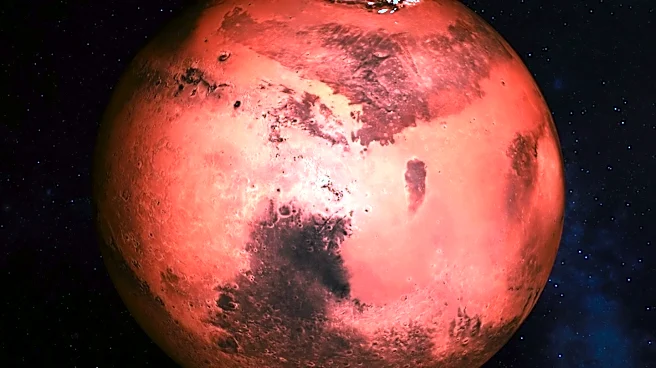
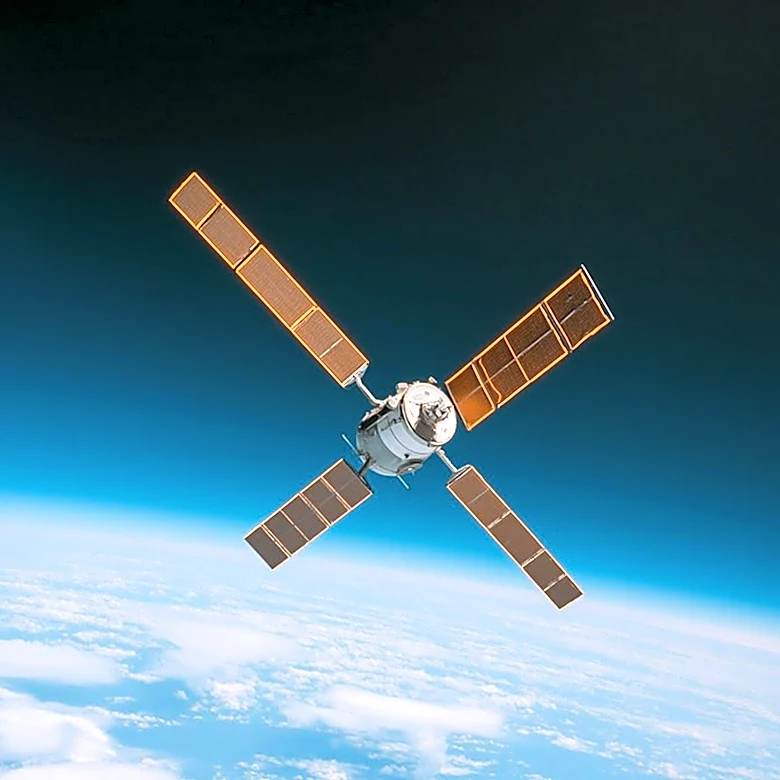
The ESCAPADE mission, led by the University of California, Berkeley, is set to explore Martian aurora and the thermal properties of Mars' surface and atmosphere. The mission involves two spacecraft built by Rocket Lab, currently in a 'loiter' orbit around
Lagrange point 2, about a million miles from Earth. These spacecraft will use space-qualified cameras to capture images of Martian aurora and conduct thermal studies. The mission is scheduled to reach Mars in September 2027, following a gravity assist maneuver from Earth in November 2026. The recent imaging of Earth and the Moon by ESCAPADE's cameras serves as a calibration check, ensuring the equipment is ready for its primary mission objectives.
Why It's Important?
This mission is significant as it aims to enhance our understanding of how solar wind interacts with the Martian environment, contributing to atmospheric loss on Mars. Such insights are crucial for future Mars exploration and potential human colonization. The mission's success could pave the way for more advanced studies of Mars' atmosphere and surface, providing data that could influence future space missions and the development of technologies for sustaining human life on Mars. The involvement of Rocket Lab and the use of advanced imaging technology also highlight the growing role of private companies in space exploration.
What's Next?
The ESCAPADE mission will continue its journey towards Mars, with a critical gravity assist maneuver scheduled for November 2026. Upon arrival in September 2027, the spacecraft will begin its scientific observations, focusing on the interaction between solar wind and the Martian atmosphere. The data collected will be analyzed to understand the processes driving atmospheric loss on Mars, potentially informing future missions and strategies for Mars exploration.