
What's Happening?
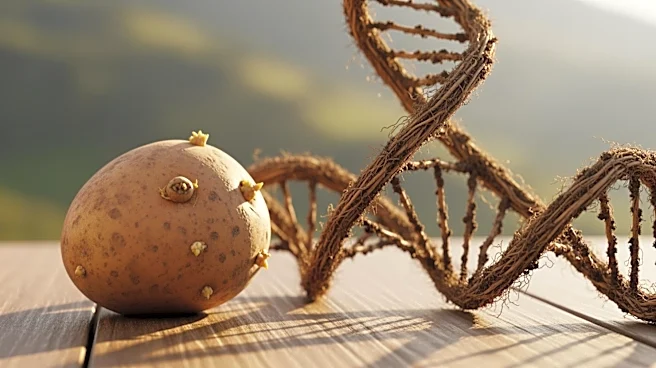
A recent study published in Nature Communications has uncovered a significant genetic adaptation in Indigenous Andean populations linked to the domestication of potatoes around 10,000 years ago. The research
highlights the role of the AMY1 gene, which influences the production of salivary amylase, an enzyme crucial for starch digestion. Andean populations exhibit a higher number of AMY1 gene copies compared to the global average, suggesting a natural selection process favoring individuals with enhanced starch digestion capabilities. This genetic adaptation is believed to have provided a survival advantage in the high-altitude Andean environment.
Why It's Important?
The findings of this study provide valuable insights into human evolutionary biology and the impact of diet on genetic adaptation. The research underscores the dynamic nature of human evolution, demonstrating how cultural practices, such as agriculture, can drive genetic changes over time. This case study of the Andean populations offers a compelling example of how human biology continues to evolve in response to environmental and dietary pressures. The study also challenges simplistic views of human dietary evolution, highlighting the complexity of genetic adaptation in response to changing food sources.
Beyond the Headlines
The study's implications extend beyond the Andes, offering a broader lesson on the interplay between culture and genetics. It challenges the notion that human metabolic pathways are fixed, illustrating how populations can rapidly adapt to new dietary conditions. This research may influence future studies on genetic adaptation and dietary evolution, potentially informing nutritional guidelines and public health strategies. The Andean example serves as a reminder of the intricate relationship between human biology and cultural practices, emphasizing the need for a nuanced understanding of human evolution.