




What's Happening?
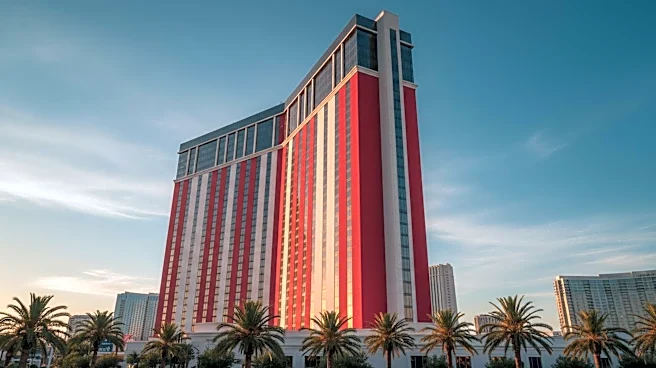
The OYO Hotel in Las Vegas is currently under investigation by major travel booking sites, Booking.com and Expedia, due to allegations of deceptive listings. Influencers on social media platforms, particularly TikTok, brought attention to the issue, claiming
the hotel created fake listings under names like 'Palette' and 'Collection O' with misleading photos and details. Ariana Patiño, a Utah mother, shared her experience of booking a stay at 'Palette' through Booking.com, only to find herself at the OYO Hotel, which she had deliberately tried to avoid due to its poor reputation. A local influencer, Vegas Starfish, amplified Patiño's video, warning her 1.8 million followers about the alleged scheme. The OYO Hotel acknowledged the situation, stating that the listings went live prematurely as part of a 'dual-brand strategy' for different accommodation options during ongoing renovations. They expressed regret for the confusion and inconvenience caused.
Why It's Important?
This incident highlights the growing concern over transparency and authenticity in online travel bookings and the significant influence of social media in exposing such practices. For consumers, it underscores the potential for being misled by deceptive advertising, even on established booking platforms, leading to unsatisfactory travel experiences. For the hospitality industry, it emphasizes the critical need for accurate representation of properties and services to maintain consumer trust and avoid reputational damage. The involvement of influencers in uncovering and disseminating this information demonstrates their power in holding businesses accountable, but also raises questions about the broader landscape of influencer marketing and its ethical implications. Travel booking sites face the challenge of enhancing their verification processes to prevent fraudulent listings and protect their users, as 'bad actors continue to develop increasingly sophisticated tactics.'
What's Next?
Booking.com and Expedia are actively investigating the listings related to the OYO Hotel. OYO has stated they are taking immediate steps to correct the affected listings and ensure they are only made available once renovations are complete. They are also reaching out directly to impacted guests to explain the situation and offer solutions, including access to upgraded accommodation options at no additional charge or a full refund. This suggests a period of remediation and customer outreach from OYO. The investigations by the booking platforms could lead to stricter listing policies or enhanced verification methods to prevent similar incidents in the future. The ongoing scrutiny from social media influencers may also continue to pressure the hotel and booking sites to ensure full transparency and accountability.
Beyond the Headlines
This situation delves into the ethical complexities of digital marketing and the blurred lines between genuine representation and strategic manipulation. The use of AI-generated edits in some of the misleading photos, as noted in the source, points to a broader trend of leveraging advanced technology to create deceptive online presences. This raises questions about the future of digital authenticity and the increasing difficulty for consumers to discern reality from fabricated online content. Furthermore, the incident underscores the evolving role of social media influencers as informal watchdogs, capable of mobilizing public attention and prompting corporate action. This dynamic shifts some power from traditional regulatory bodies to a more decentralized, public-driven accountability system, which can be both swift and impactful, but also potentially prone to misinformation if not handled responsibly.