




What's Happening?
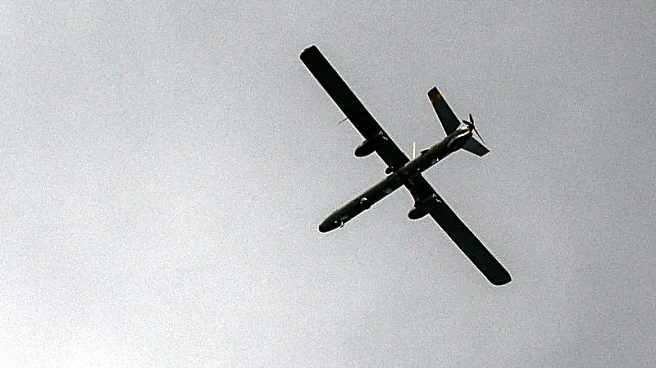
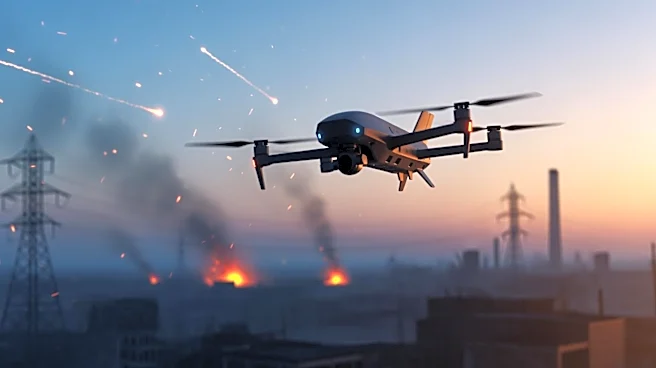
The U.S. Army is deploying low-cost interceptor drones, known as Merops, initially tested in Ukraine, to counter Iranian-made Shahed drones. This move aims to address the economic imbalance in air defense, where adversaries have benefited from using inexpensive,
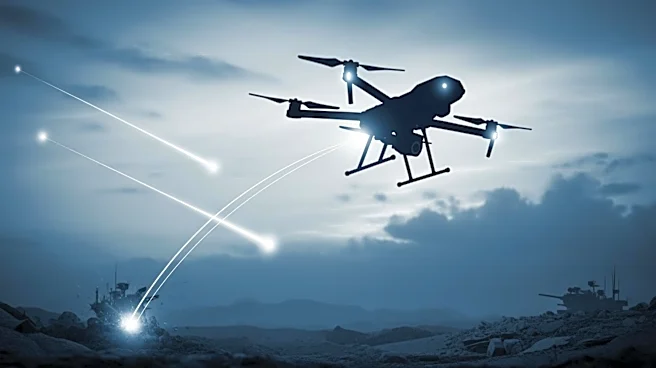
disposable technology. Army Secretary Dan Driscoll highlighted the rapid acquisition and deployment of 13,000 Merops units, emphasizing their cost-effectiveness. Developed by Perennial Autonomy, the Merops drones are designed to destroy hostile drones in flight, featuring a range of 5 to 20 kilometers and speeds up to 280 kilometers per hour. They carry a two-kilogram fragmentation warhead and utilize onboard sensors for target tracking, capable of operating in contested environments resistant to GPS and radio-frequency jamming. Initially used by Ukrainian forces against Russian-operated systems, these drones have also been deployed by NATO allies like Poland and Romania.
Why It's Important?
The adoption of Merops drones by the U.S. Army signifies a strategic shift in air defense, focusing on cost-effective solutions to counter massed drone attacks. This approach could redefine military spending, allowing for more efficient allocation of resources in defense budgets. The Merops drones' ability to operate in contested environments and resist jamming enhances the U.S. military's capability to protect its assets and allies. This development also underscores the increasing importance of autonomous and robotic systems in modern warfare, potentially influencing future military strategies and procurement decisions. The use of these drones by NATO allies further strengthens the alliance's defense posture against emerging threats.
What's Next?
The U.S. Army plans to scale up the production of Merops drones, potentially reducing their cost below $10,000 per unit. This could lead to broader deployment across various military branches and allied forces. The effectiveness of these drones in real-world scenarios will likely be closely monitored, influencing future investments in similar technologies. Additionally, the success of Merops drones may prompt further innovation in autonomous defense systems, encouraging collaboration between military and private sectors to develop advanced solutions for emerging threats.