






What's Happening?
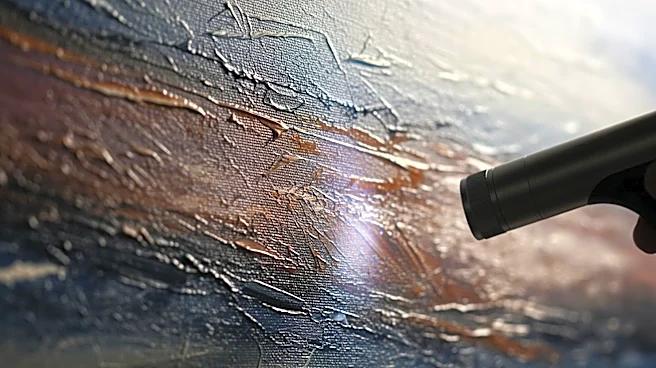
A comprehensive study has been conducted on the paintings of Willi Baumeister using non-destructive and micro-invasive analytical methods. The investigation, carried out by multiple institutions, aimed to uncover the materials and stratigraphy of Baumeister's
artworks. Techniques such as stereomicroscopy, vibrational spot-analysis, and imaging methods were employed to map the distribution of materials in the paintings. The study revealed the use of various pigments, fillers, and binders, including lead white, zinc white, titanium white, and cadmium-based pigments. Additionally, organic materials like buttermilk and polyvinyl acetate were identified, suggesting their use as binders or surface coatings. The findings provide insight into Baumeister's artistic techniques and material choices between 1930 and 1955.
Why It's Important?
The study of Willi Baumeister's paintings using advanced analytical techniques is significant for art conservation and historical research. By identifying the materials and methods used by Baumeister, conservators can better understand the artist's intentions and preserve his works for future generations. The use of non-destructive techniques allows for detailed analysis without damaging the artworks, which is crucial for maintaining their integrity. Furthermore, the findings contribute to the broader understanding of 20th-century art practices and the evolution of materials used by artists during this period. This research also highlights the importance of interdisciplinary collaboration in art conservation, combining expertise from chemistry, art history, and conservation science.