


What's Happening?
Torrential rain in South Florida led to the collapse of the roof at Temple Sinai in Hollywood, Broward County, on Wednesday morning. No injuries were reported, but the synagogue sustained significant damage, with a large crack visible along the top of the building
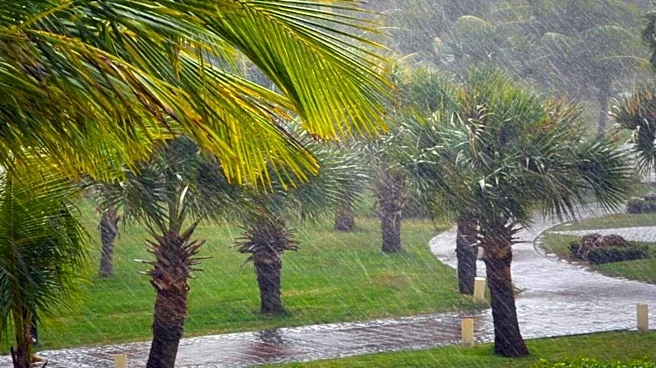
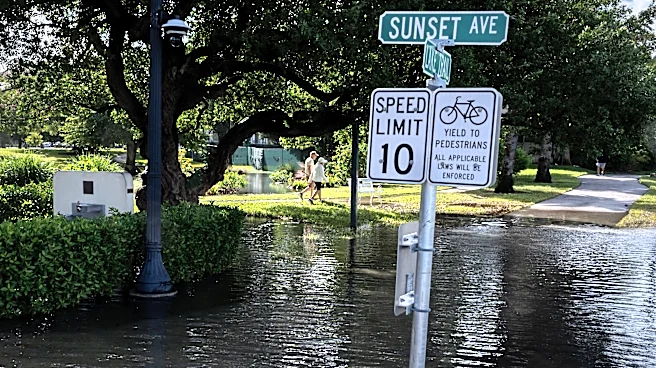
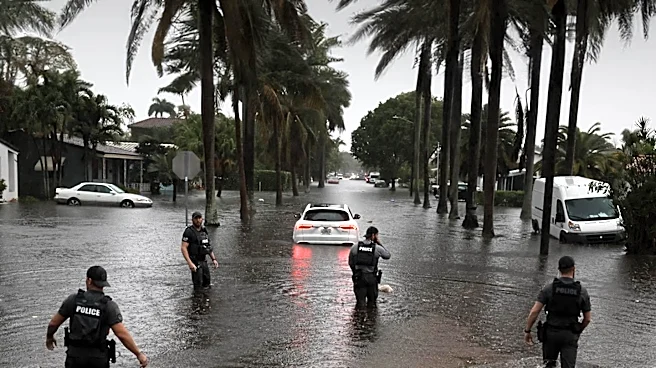
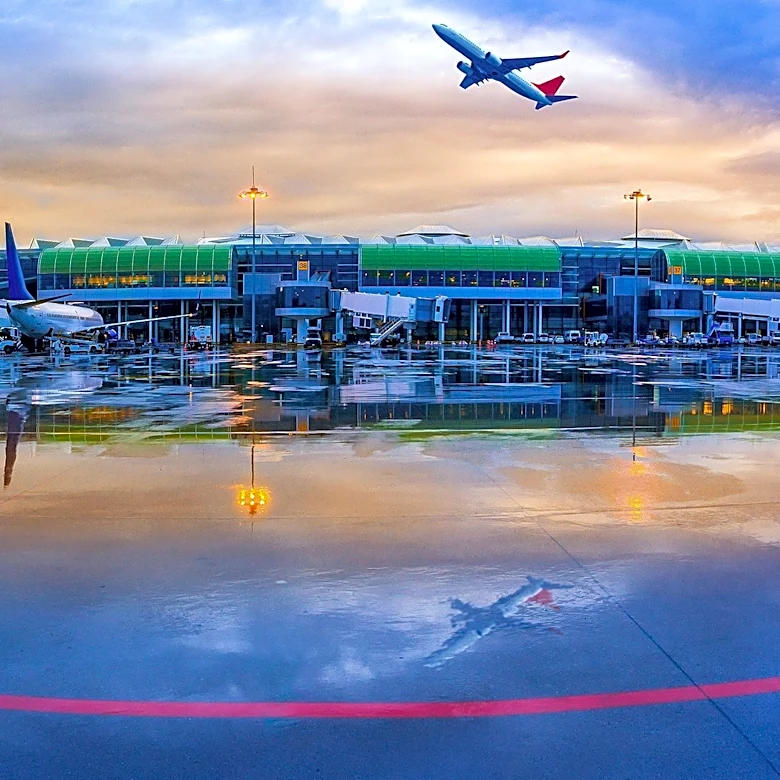
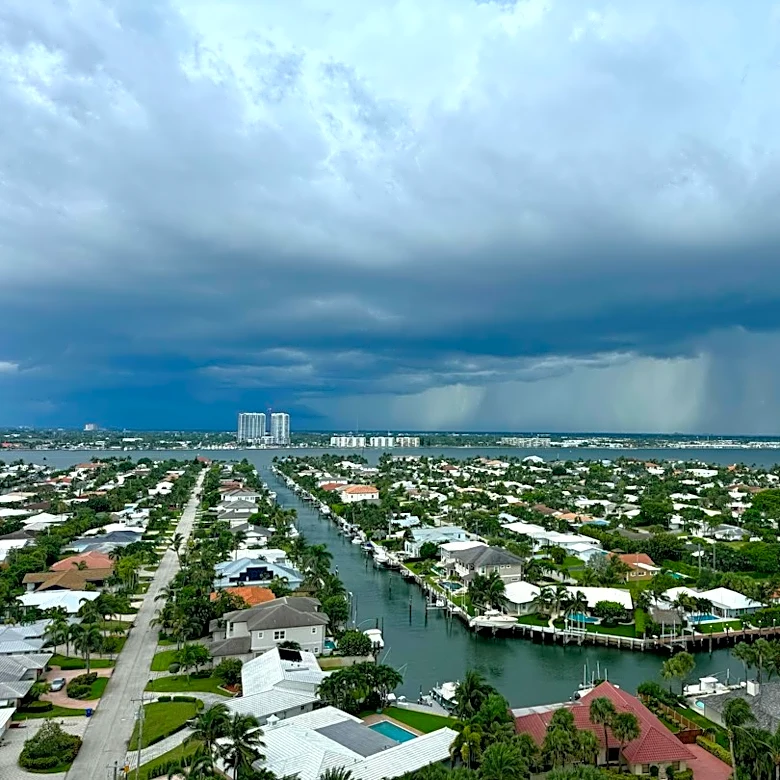
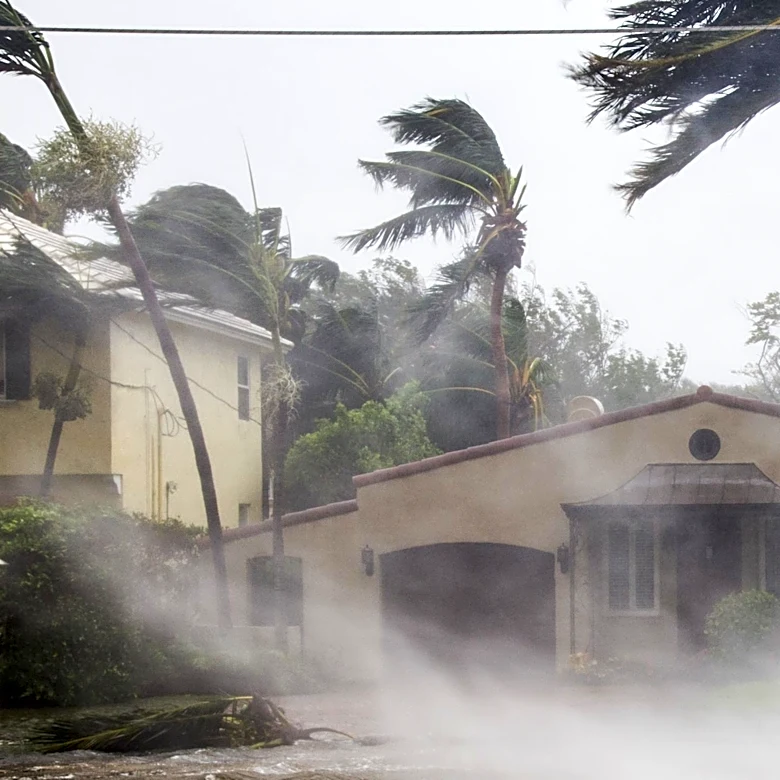
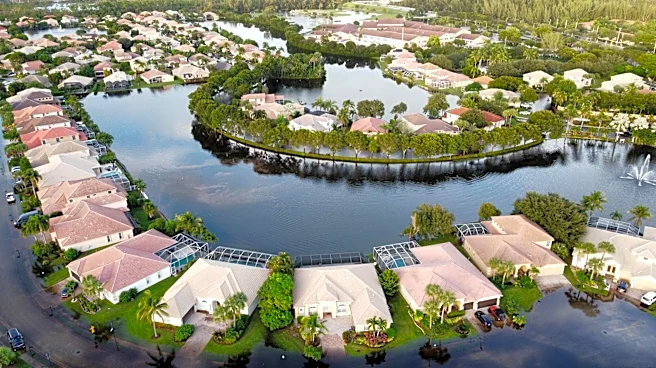
and the entire ceiling having fallen. Rabbi Gideon Goldenholz stated that the campus, which includes an early childhood center and a school, is now closed, and it is uncertain whether the synagogue can be repaired or will need to be demolished. The collapse occurred as parts of Broward County experienced nearly a foot of rain, causing extensive flooding, submerged roads, and stranded motorists. Hollywood received between 8 and 10 inches of rain over 24 hours, while areas near Plantation recorded approximately 11.9 inches. In response to the severe weather, Broward County officials declared a local state of emergency, resulting in the closure of government offices, parks, and libraries. Broward County Public Schools canceled classes, and Memorial Regional Hospital in Hollywood temporarily suspended visitations due to flooding around its facility. Fort Lauderdale-Hollywood International Airport also experienced a weather-related ground stop, which was later lifted.
Why It's Important?
This event highlights the increasing vulnerability of urban infrastructure to extreme weather phenomena, particularly heavy rainfall and flash flooding. The damage to Temple Sinai, a significant community institution, underscores the direct impact on local communities, disrupting educational services and places of worship. The declaration of a state of emergency in Broward County reflects the severity of the situation and the need for coordinated governmental response to protect residents and critical services. The widespread closures of schools, government facilities, and disruptions to hospital operations and air travel demonstrate the cascading effects of such weather events on daily life and regional economic activity. For residents, the immediate concern is safety and property damage, while the broader implication points to the need for enhanced urban planning and infrastructure resilience in flood-prone areas. The incident also brings to the forefront the challenges faced by communities in adapting to more frequent and intense weather patterns, potentially exacerbated by climate change.
What's Next?
In the immediate future, inspections will be conducted at Temple Sinai to assess the structural integrity of the building and determine the feasibility of repairs versus demolition. The Jewish Federation of Broward County has offered support to the synagogue as leaders evaluate the damage and needs. Broward County officials will continue to monitor weather conditions, as additional rainfall remains possible, and will manage the ongoing state of emergency, coordinating recovery efforts and providing assistance to affected residents. Schools and other public facilities will likely remain closed until conditions improve and safety can be assured. Residents are urged to avoid flooded roadways, and emergency services will remain on alert for further incidents. Long-term, this event may prompt discussions among local authorities and community leaders about improving flood mitigation strategies, updating infrastructure, and enhancing emergency preparedness plans to better withstand future extreme weather events in South Florida.
Beyond the Headlines
The roof collapse at Temple Sinai and the widespread flooding in Broward County serve as a stark reminder of the growing challenges posed by extreme weather events in the U.S. Beyond the immediate physical damage and disruptions, such incidents can have profound social and psychological impacts on affected communities. The closure of a synagogue, school, and early childhood center disrupts the social fabric, affecting religious life, education, and childcare for hundreds of families. This event also underscores broader questions about urban development in low-lying coastal areas and the adequacy of existing infrastructure to handle increasingly intense rainfall. It highlights the disproportionate impact on vulnerable populations, as seen in other studies, who may have fewer resources to recover from such disasters. The incident could catalyze a re-evaluation of building codes, zoning regulations, and investment in resilient infrastructure, pushing for more sustainable and adaptive urban planning in regions susceptible to climate-related hazards.