





What's Happening?
The U.S. Forest Service is undergoing a major reorganization that will result in the closure of 57 out of 77 research facilities nationwide, including six in the Mountain West region. The agency plans to consolidate its five regional research stations
into a single hub in Fort Collins, Colorado, to streamline decision-making and better connect science to land management. Despite assurances that scientific work will continue, the closures have raised concerns about the loss of local partnerships and long-term monitoring capabilities. The reorganization also involves moving the agency's headquarters from Washington, D.C., to Salt Lake City, Utah, affecting approximately 260 jobs. Scientists at affected labs have been informed that their positions will be relocated, but details remain unclear.
Why It's Important?
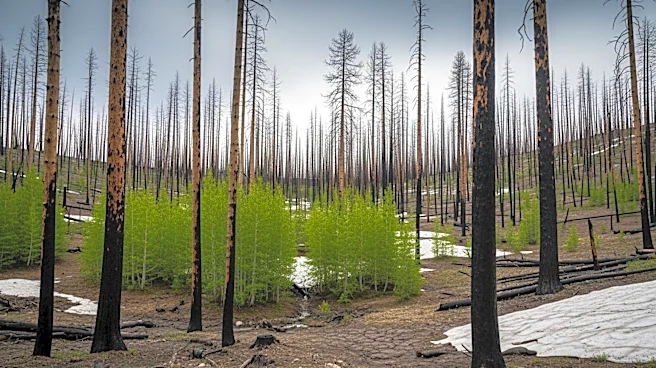
The closure of research facilities as part of the Forest Service's reorganization could have significant implications for public land management and scientific research. The affected labs play a crucial role in studying invasive species, post-wildfire recovery, and other environmental issues. The loss of these facilities may hinder the agency's ability to conduct place-based research and maintain local partnerships, which are vital for effective land management. The reorganization could also lead to a loss of institutional knowledge and scientific capacity, as some scientists may choose to leave the agency rather than relocate. This could impact the agency's ability to address environmental challenges and manage public lands sustainably.
What's Next?
The reorganization is likely to face opposition from scientists, environmental groups, and local communities concerned about the impact on research and land management. There may be calls for the agency to reconsider its plans and ensure that scientific research and local partnerships are preserved. The relocation of the headquarters and restructuring of research facilities could also lead to workforce disruptions and affect the agency's operations. Stakeholders may advocate for policies that prioritize scientific research and conservation efforts, balancing the need for resource management with environmental protection.