
What's Happening?
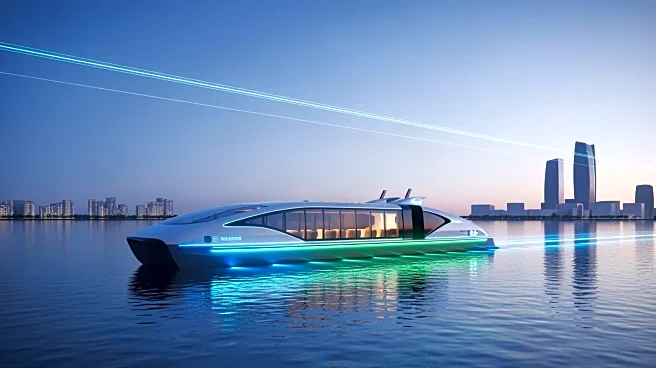
Stockholm has successfully integrated the Candela P-12, an electric flying ferry, into its public transport system. This innovative vessel has halved travel times and significantly reduced emissions, offering
a new model for urban waterway transport. The ferry operates on Route 89, connecting the suburb of Ekero with central Stockholm, and has been well-received by passengers. The P-12 uses hydrofoil technology to 'fly' above the water, minimizing drag and energy consumption, which allows for high-speed travel with minimal environmental impact.
Why It's Important?
The introduction of the Candela P-12 represents a significant advancement in sustainable urban transport. By drastically cutting emissions and travel times, it addresses two major challenges faced by cities worldwide: environmental impact and efficiency. This development could serve as a blueprint for other cities looking to enhance their public transport systems while reducing their carbon footprint. The success of the P-12 also highlights the potential for electric and hydrofoil technology to transform waterborne transport, offering a cleaner and more efficient alternative to traditional diesel-powered ferries.
What's Next?
With the success of the P-12, Stockholm plans to expand its fleet, potentially replacing existing diesel ferries with more electric models. This could lead to increased frequency of service and higher passenger capacity, further enhancing the city's public transport network. Other cities may look to Stockholm's example as they consider similar innovations in their own transport systems. The continued development and deployment of electric ferries could also drive advancements in related technologies, such as battery efficiency and hydrofoil design.