



What's Happening?
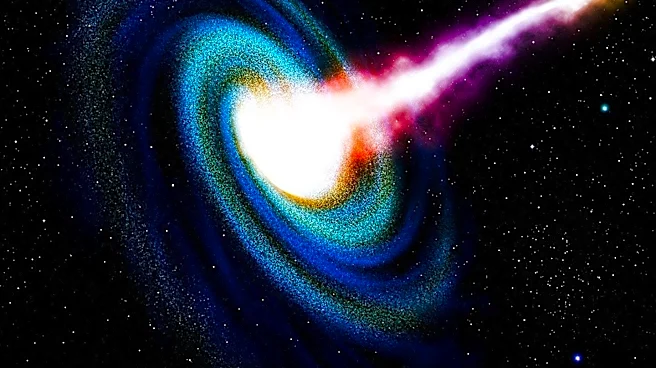
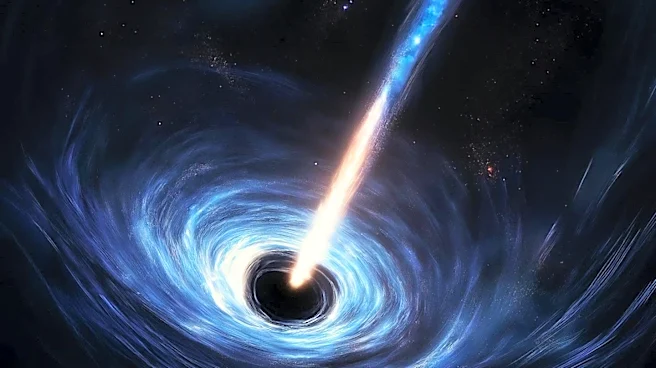
Recent research published in the journal Monthly Notices of the Royal Astronomical Society indicates that the afterlife of black hole jets in dying radio galaxies is shorter and more dynamic than previously understood. Scientists utilized multifrequency
observations from surveys like MeerKAT MIGHTEE and uGMRT superMIGHTEE, along with data from LOFAR, GMRT, and the Jansky Very Large Array, to study 14 candidate remnant radio galaxies in the XMM–Newton Large-Scale Structure (XMM–LSS) field. These remnant galaxies represent the final stage of radio-galaxy evolution where the central active galactic nucleus (AGN) jets have ceased to replenish the radio lobes with energetic particles. The study confirmed 12 of the 14 candidates as genuine remnant radio galaxies, with two reclassified as active sources. A key finding is the relatively young age of these remnants, ranging from approximately 8 to 42 million years, with a median age of about 12 million years, suggesting a population of short-lived remnants that were previously overlooked. Spatially resolved spectral-age maps further revealed that radio lobes continue to evolve even after their jets have switched off, showing systematic age gradients in extended sources and more irregular aging patterns in compact remnants.
Why It's Important?
This discovery significantly advances the understanding of the complete life cycle of radio galaxies and the duty cycles of their central supermassive black holes. By identifying a population of faint, rapidly fading remnant radio galaxies, the research provides crucial insights into the processes that occur after supermassive black holes cease powering their radio jets. The finding that these remnants are relatively young and short-lived challenges previous assumptions about the duration of the remnant phase. This improved understanding is vital for refining astrophysical models of galaxy evolution and the role of active galactic nuclei within them. The study also highlights the importance of dense, multifrequency observations for accurately classifying remnant galaxies, as limited data can lead to misinterpretations. Furthermore, the research offers a preview of the larger population of faint, high-redshift remnant radio galaxies that are expected to be uncovered by future deep Square Kilometre Array (SKA) radio continuum surveys, which will further enhance our knowledge of the universe's evolution.
What's Next?
The findings from this study will likely inform and guide future astronomical observations, particularly those conducted by upcoming deep Square Kilometre Array (SKA) radio continuum surveys. These surveys are expected to uncover a much larger population of faint, high-redshift remnant radio galaxies, building upon the insights gained from this research. Astronomers will continue to refine their spectral modeling techniques and observational strategies to more accurately identify and characterize these short-lived remnants. Further investigations will likely focus on understanding the specific environmental and magnetic-field influences that contribute to the irregular aging patterns observed in compact remnants. The ongoing study of these dying radio galaxies will contribute to a more comprehensive picture of how supermassive black holes interact with their host galaxies and the broader cosmic environment over time, potentially leading to revisions in current theories of galaxy formation and evolution.
Beyond the Headlines
The revelation of a shorter, more dynamic afterlife for black hole jets has profound implications for our understanding of cosmic energy cycles. Supermassive black holes are known to play a critical role in regulating star formation and the growth of galaxies through the energy they release. If the 'off' phase of their jets is shorter and more complex than previously thought, it suggests a more rapid and intricate interplay between the black hole and its galactic environment. This could mean that the feedback mechanisms from active galactic nuclei are more episodic and impactful over shorter timescales, influencing the distribution of gas and dust within galaxies in ways not fully appreciated. The study also underscores the continuous evolution of scientific understanding, where new observational techniques and data analysis can overturn long-held assumptions, pushing the boundaries of astrophysics and cosmology. The ability to detect and characterize these faint, rapidly fading remnants opens new avenues for exploring the universe's energetic history and the fundamental processes governing its largest structures.