







What's Happening?
Owensboro and Daviess County, Kentucky, played crucial roles in agricultural production and manufacturing during World War II. As part of the U.S. Department of Agriculture’s “Hemp for Victory” campaign, local farmers significantly increased hemp cultivation.
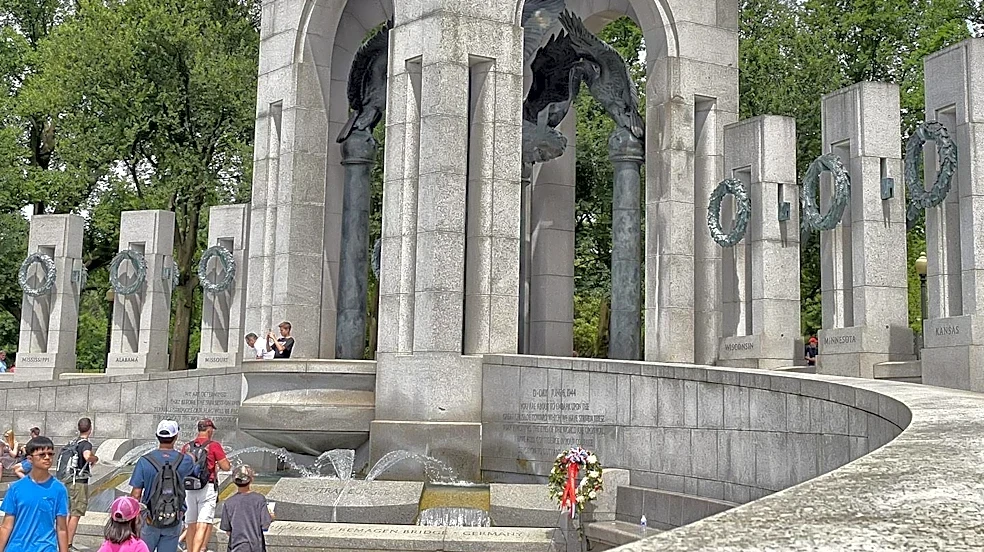
This was vital after the fall of the Philippines in 1942 cut off U.S. hemp imports, as hemp was essential for military equipment like rope, canvas, uniforms, aviation lubricant, and parachutes. Farmers in Daviess County attended classes to learn optimal hemp production methods and even held competitions to maximize yields. Additionally, the Ken-Rad company in Owensboro secured a government contract to manufacture radio transmitting tubes, expanding its workforce to over 3,500. These tubes were critical components in radios used across all military operations, including those in planes that participated in bombing missions during the war. The community continues to honor its World War II legacy with memorials and Veteran’s Day parades, and by sending honor flights to Washington D.C. for veterans and home front workers to visit the National World War II Memorial.
Why It's Important?
The contributions of Owensboro and Daviess County highlight the widespread impact of World War II on the American home front and the critical role that local communities played in the national war effort. The rapid pivot to hemp production demonstrates the adaptability and patriotism of American farmers in meeting urgent wartime demands, directly addressing a strategic supply chain vulnerability. Ken-Rad's manufacturing efforts underscore the vital importance of industrial production in supporting military operations, illustrating how a single company could become indispensable to the war machine. This historical account provides a tangible example of how civilian efforts, from agriculture to manufacturing, were directly linked to the success of military campaigns. The ongoing commemoration efforts also emphasize the enduring legacy of these contributions and the community's commitment to remembering the sacrifices and efforts made during that period, reinforcing national identity and historical awareness.
What's Next?
While the immediate wartime efforts are historical, the legacy of Owensboro and Daviess County's contributions continues to be honored through ongoing commemorative activities. These include annual Veteran’s Day parades and honor flights, which ensure that the sacrifices and efforts of World War II veterans and home front workers are not forgotten. These events serve to educate younger generations about the community's historical significance and the broader impact of the war. The historical narrative also provides a foundation for understanding the resilience and resourcefulness of American communities in times of national crisis. Future efforts may involve further historical preservation, educational programs, or community initiatives that draw inspiration from this period of significant national service.
Beyond the Headlines
The story of Owensboro and Daviess County during World War II offers a deeper insight into the concept of total war, where civilian life and industrial capacity were fully mobilized to support military objectives. The "Hemp for Victory" campaign, in particular, illustrates how national policy could rapidly transform local agricultural practices, demonstrating the government's ability to direct resources for strategic purposes. This also touches upon the often-overlooked contributions of agriculture to wartime success, beyond just food production. Furthermore, Ken-Rad's role in manufacturing essential radio components highlights the technological and industrial backbone necessary for modern warfare. The community's continued remembrance efforts underscore the cultural and social importance of honoring historical service, fostering a sense of collective memory and national pride that transcends generations.