
What's Happening?
A recent study published in the journal Nature Ecology and Evolution has revealed that industrial mining of the seabed could significantly reduce the abundance and diversity of small marine animals in the Pacific
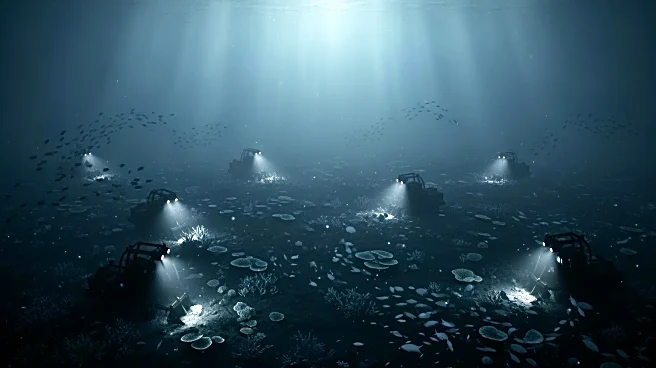
Ocean. The research, funded by The Metals Co., focused on the Clarion-Clipperton Zone, a region rich in mineral nodules containing nickel, cobalt, copper, and manganese. These metals are crucial for renewable energy technologies and military applications. The study found a 37% reduction in the number of small animals, such as worms and crustaceans, and a 32% decline in species variety in areas affected by mining activities. The Metals Co. has invested approximately $250 million in studying the environmental impacts of seabed mining, with researchers independently analyzing and publishing their findings. Despite the potential economic benefits, nearly 40 countries have called for a moratorium or ban on seabed mining due to environmental concerns.
Why It's Important?
The findings of this study are significant as they highlight the potential ecological risks associated with seabed mining, an emerging industry poised to meet the growing demand for critical minerals. The reduction in marine biodiversity could have cascading effects on ocean ecosystems, potentially disrupting food webs and affecting commercial fisheries. The study underscores the need for comprehensive environmental assessments before commercial mining operations commence. The involvement of The Metals Co. in funding independent research reflects the industry's recognition of the need for scientific data to inform regulatory decisions. However, the study also raises questions about the long-term sustainability of seabed mining and its alignment with global environmental conservation goals.
What's Next?
The National Oceanic and Atmospheric Administration (NOAA) is currently considering the first permit applications from The Metals Co. for seabed mining exploration in international waters, with public hearings scheduled for late January. The Trump administration has proposed expanding mining areas around American Samoa, despite local opposition. As the debate over seabed mining continues, stakeholders, including environmental groups, governments, and industry players, will likely engage in discussions to balance economic interests with environmental protection. The outcome of these discussions could shape the future regulatory framework for seabed mining and influence international policies on marine resource management.
Beyond the Headlines
The study's findings also highlight the ethical considerations of exploiting deep-sea resources. The potential for irreversible damage to unique and largely unexplored marine ecosystems raises questions about humanity's responsibility to preserve the natural world. The research emphasizes the need for a precautionary approach to seabed mining, advocating for more extensive scientific exploration and data collection to understand the full impact of such activities. The involvement of independent scientists in the research process is crucial for ensuring transparency and credibility in environmental assessments, setting a precedent for future collaborations between industry and academia.