







What's Happening?
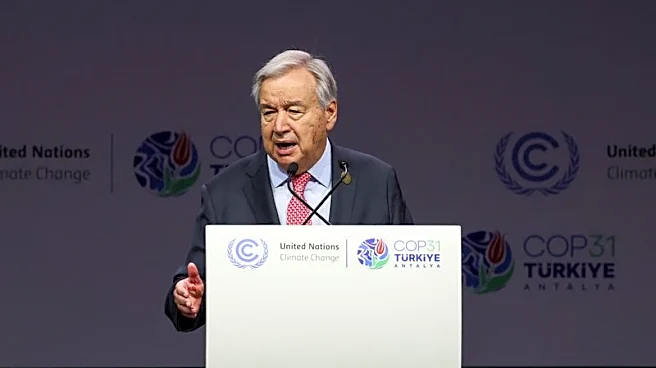
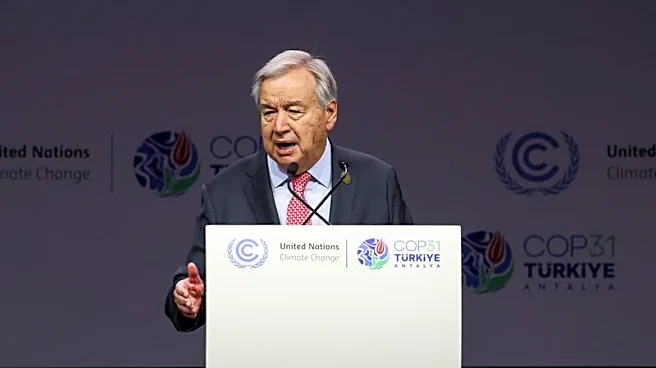
At COP31 in Antalya, Türkiye, the Global Initiative for Information Integrity on Climate Change introduced the 'Priorities for Action on AI for Climate Information Integrity.' This initiative, co-chaired by Brazil, the UN, and UNESCO, aims to ensure the reliability
of climate information generated by AI and information regarding AI's impact on the climate. The move comes as more individuals increasingly rely on AI for climate data, despite warnings from the Independent International Scientific Panel on AI about the ease of producing fluent but not necessarily factual text. The risks are particularly heightened during climate disasters, where AI-generated visuals can spread rapidly, potentially outpacing official warnings. The new priorities build upon the Belém Declaration and the UN Global Principles for Information Integrity, emphasizing transparency, accountability, and human rights. Germany has committed EUR 2 million to the Global Fund for Information Integrity on Climate Change, administered by UNESCO, to support research, communication strategies, and public awareness campaigns.
Why It's Important?
The increasing reliance on artificial intelligence for critical information, especially concerning climate change, presents both opportunities and significant risks. The launch of these global principles is crucial for the United States and the international community as it addresses the potential for misinformation and disinformation in a rapidly evolving digital landscape. Unreliable climate information, whether from AI or about AI's environmental footprint, can hinder effective climate action, mislead public opinion, and undermine policy efforts. For U.S. industries, particularly those in technology and media, these guidelines could influence how AI tools are developed, deployed, and regulated to ensure data accuracy and transparency. The commitment to transparency regarding AI's energy consumption and carbon footprint also impacts U.S. tech companies, pushing them towards more sustainable practices and greater disclosure. The initiative aims to foster a more informed public discourse on climate change, which is vital for garnering support for necessary policy changes and investments in climate resilience.
What's Next?
Following the launch of the 'Priorities for Action on AI for Climate Information Integrity,' AI companies are expected to assess and publish findings on how their systems affect climate information integrity, as well as disclose their energy usage and environmental footprints. States are encouraged to integrate information integrity into their national AI strategies and climate plans. The Global Initiative will continue to urge other countries to invest in the Global Fund for Information Integrity on Climate Change, following Germany's initial commitment. The Belém Declaration on Information Integrity on Climate Change, which 29 countries and the European Union have already signed, remains open for further endorsement, indicating a growing international consensus on the issue. These steps suggest a concerted effort to establish a global framework for responsible AI use in climate communication and to combat climate-related misinformation.
Beyond the Headlines
The initiative delves into the deeper ethical and societal implications of AI's role in shaping public understanding of climate change. The emphasis on transparency and accountability for AI actors highlights a growing recognition that technological advancements must be coupled with robust ethical frameworks to prevent misuse and ensure public trust. The call for a global advertising charter to ensure transparency across the advertising supply chain, particularly concerning climate disinformation and greenwashing, points to a broader effort to address the financial incentives that can perpetuate misleading narratives. This could lead to significant shifts in how digital advertising platforms operate and how brands communicate their environmental efforts. Ultimately, this initiative underscores the critical need for information integrity in an era where AI can both empower and endanger informed decision-making on one of the most pressing global challenges.