




What's Happening?
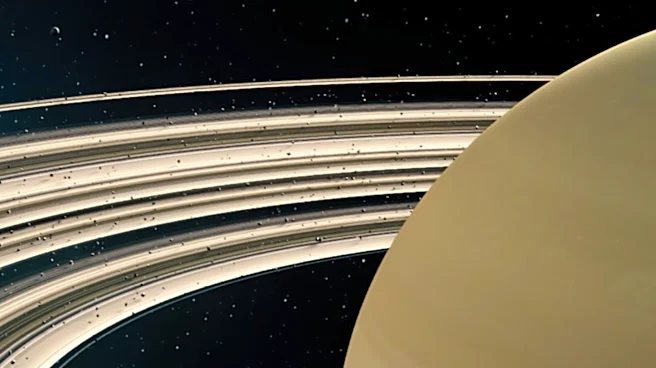
Recent findings from the Cassini spacecraft suggest that Saturn's rings are a relatively recent addition to the planet, potentially forming between 10 million to 100 million years ago. The rings, composed primarily of water ice, are much younger than
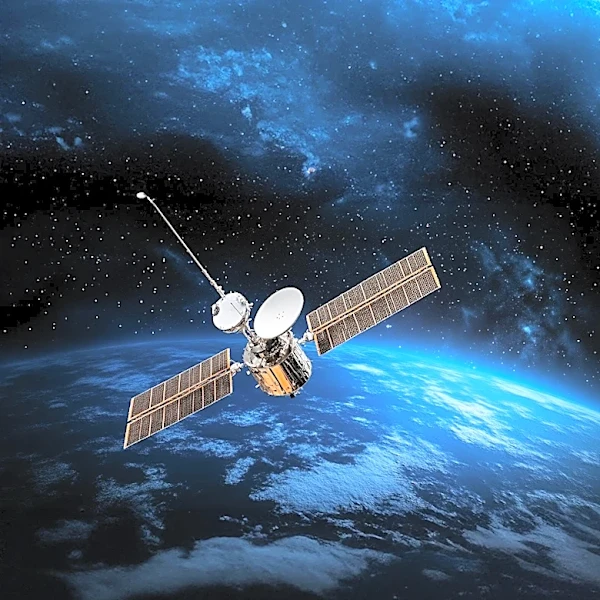
previously thought, with estimates suggesting they are no more than 400 million years old. This conclusion is based on measurements of the rings' mass and the accumulation of interplanetary dust. Additionally, the rings are not permanent; they are gradually being pulled into Saturn's atmosphere, a process known as 'ring rain.' This phenomenon is causing the rings to lose mass at a rate that could see them disappear in less than 100 million years. The Cassini probe's data, collected during its final orbits in 2017, has been crucial in understanding the dynamics and lifespan of Saturn's rings.
Why It's Important?
The discovery of Saturn's rings being both young and ephemeral challenges previous assumptions about their permanence and age. This has significant implications for our understanding of planetary ring systems and their evolution. The rapid loss of the rings due to 'ring rain' highlights the dynamic nature of planetary systems and the transient features that can exist within them. For scientists, this provides a unique opportunity to study the processes that govern ring formation and dissolution, offering insights into similar phenomena that might occur around other planets. The findings also underscore the importance of missions like Cassini in providing detailed data that can reshape our understanding of the solar system.
What's Next?
Future observations, particularly from the James Webb Space Telescope and ground-based observatories, will focus on monitoring the 'ring rain' and its effects on Saturn's atmosphere. These observations aim to refine estimates of the rings' remaining lifespan and further understand the mechanisms driving their dissolution. Continued study of Saturn's rings will also contribute to broader research on planetary ring systems, potentially informing theories about the formation and evolution of rings around other planets in the solar system and beyond.
Beyond the Headlines
The findings about Saturn's rings also raise questions about the potential for similar processes occurring around other gas giants, both within our solar system and in exoplanetary systems. Understanding the lifecycle of Saturn's rings could provide a model for studying other ring systems, offering insights into the conditions necessary for their formation and the factors that lead to their eventual disappearance. This research could also inform our understanding of the early solar system and the processes that shaped its current configuration.