



What's Happening?
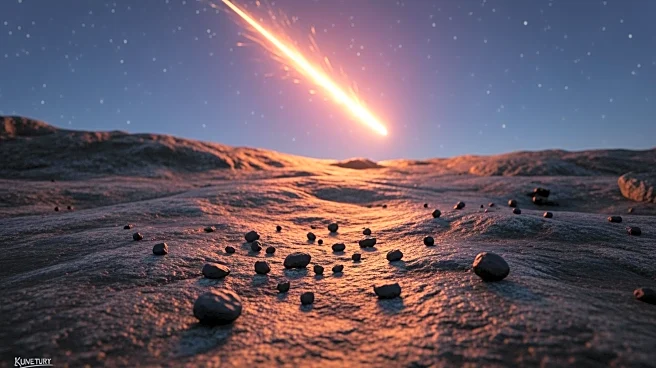
A bright fireball exploded over western Germany, scattering meteorite fragments across the region near Koblenz. The event, captured by numerous cameras and reported by over 3,200 observers, has attracted meteorite hunters eager to find pieces of the space
rock. The explosion was significant enough to register on seismometers, providing additional data for tracking the meteorite's trajectory.
Why It's Important?
Meteorite falls offer unique opportunities for scientific study, providing insights into the composition of celestial bodies and the history of the solar system. The widespread interest in this event highlights the role of citizen science in astronomical research, as public reports and video footage contribute to tracking and analyzing meteorite events. This collaboration between amateur observers and scientists can enhance our understanding of meteorite impacts and their effects.
Beyond the Headlines
The event underscores the potential for integrating technology and public participation in scientific research. The use of seismometers and video recordings demonstrates innovative methods for studying meteorite falls, while the involvement of citizen scientists highlights the democratization of science. This approach could lead to more comprehensive data collection and analysis, benefiting both professional researchers and the public.