






What's Happening?
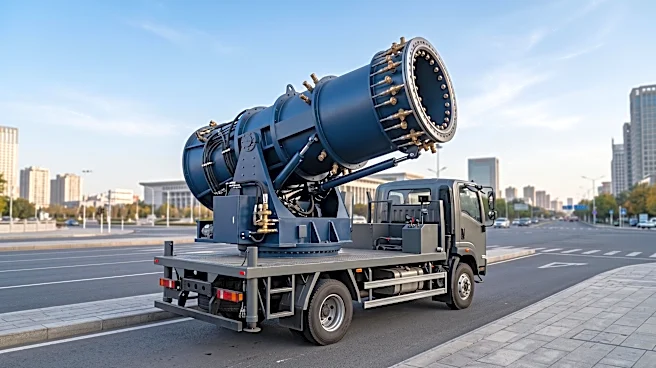
The Public Works Department (PWD) in Delhi has established two committees to inspect 200 truck-mounted anti-smog guns. This initiative comes as the air quality in the national capital deteriorates, prompting urgent pollution control measures. These anti-smog guns are
slated for deployment under a comprehensive pollution-control plan aimed at reducing dust on roads, construction sites, and other areas. The move follows a directive from Chief Minister Rekha Gupta, who recently called for enhanced monitoring efforts in anticipation of the winter season. The two committees, comprising eight PWD officials, are tasked with ensuring the proper functioning and fitness certification of each anti-smog gun. No vehicle will be permitted for installation or operation without this certification, which involves field-level inspections to verify equipment against tender terms and conditions. The PWD plans a special drive for intensive cleaning and dust control across its 1,400-km road network, with each anti-smog gun expected to clean at least 200 meters of road daily. This includes removing dust, cleaning kerb channels, and coordinating with the Municipal Corporation of Delhi.
Why It's Important?
This proactive measure by the Delhi PWD is crucial for public health and environmental quality in one of the world's most polluted cities. The deployment of anti-smog guns aims to mitigate the severe health risks associated with poor air quality, particularly during the winter months when pollution levels typically spike. By reducing airborne dust and PM2.5 particles, the initiative seeks to alleviate respiratory illnesses and other health complications among residents. Economically, improved air quality can lead to fewer sick days, increased productivity, and potentially attract more investment by enhancing the city's liveability. The rigorous inspection process underscores a commitment to effective implementation, ensuring that public funds are utilized for functional equipment. This effort could also set a precedent for other urban centers grappling with similar environmental challenges, highlighting the importance of technological solutions in urban planning and public health strategies. The coordination with the Municipal Corporation of Delhi signifies a unified approach to tackling a pervasive environmental issue.
What's Next?
The two PWD committees will immediately commence field inspections across various circles, including Shahdara, East, North-East, Project, South, South-East, and South-West. Executive engineers in all road maintenance divisions have been instructed to facilitate these inspections and assist in verifying the anti-smog guns in their respective areas. Following certification, the 200 anti-smog guns will be deployed as part of the special drive for intensive cleaning and dust control. This deployment is expected to begin before the onset of winter, aligning with Chief Minister Rekha Gupta's directive for strengthened monitoring. The effectiveness of these measures will likely be closely monitored, with potential adjustments or expansions based on their impact on air quality. Public and environmental groups will also be observing the outcomes, potentially advocating for further interventions if pollution levels remain high. The success of this initiative could influence future policy decisions regarding urban air quality management.
Beyond the Headlines
Beyond the immediate goal of reducing pollution, this initiative reflects a broader societal shift towards acknowledging and actively combating environmental degradation in urban settings. The emphasis on physical inspection and functional verification highlights a growing demand for accountability and efficacy in public projects, moving beyond mere procurement to ensuring operational readiness. This could foster greater public trust in government interventions for environmental protection. Furthermore, the use of anti-smog guns, while a technological solution, also brings into focus the underlying issues of urban development, construction practices, and vehicular emissions that contribute to dust and particulate matter. It prompts a deeper conversation about sustainable urban planning, green infrastructure, and the long-term strategies needed to prevent pollution rather than merely mitigate its effects. The initiative also underscores the critical role of inter-agency coordination in addressing complex environmental challenges, setting a precedent for collaborative governance.