
What's Happening?
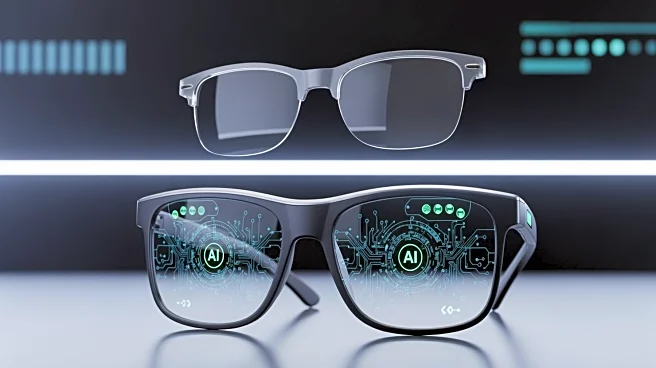
In 2025, the augmented reality (AR) industry is witnessing significant advancements with a focus on AI integration and prescription compatibility. Major tech outlets have highlighted a shift towards AI-first
glasses and prescription-ready optics. Notable devices include Meta Ray-Ban Gen 2, which combines AI features with fashion-forward sunglasses, and Xiaomi AI Glasses, offering budget-friendly AI optics. The RayNeo X3 Pro is noted for its developer-friendly features, while the Even/Realities G2 emphasizes display fidelity. A key trend is the integration of brain-computer interfaces, which, although experimental, promise hands-free control. Additionally, enterprise AR kits are gaining traction for their utility in field service and logistics, indicating a stable demand in the business sector.
Why It's Important?
The developments in AR technology are poised to transform daily life by making AR more accessible and practical. The focus on prescription compatibility addresses a significant barrier to consumer adoption, making AR devices usable for a broader audience. AI integration enhances functionality, allowing for hands-free navigation and real-time information access, which is particularly beneficial for commuters and professionals. The enterprise sector's investment in AR for operational efficiency underscores the technology's potential to drive productivity and innovation across industries. As AR becomes more integrated into everyday life, it could lead to new ways of interacting with digital content and environments.
What's Next?
As AR technology continues to evolve, we can expect further advancements in AI capabilities and prescription solutions, making these devices more appealing to a wider audience. The experimental integration of brain-computer interfaces could lead to groundbreaking changes in how users interact with AR, potentially reducing reliance on traditional input methods. The enterprise sector's ongoing investment in AR suggests that businesses will continue to explore and expand the use of AR for training, logistics, and customer service. This could lead to increased demand for AR solutions tailored to specific industry needs.
Beyond the Headlines
The push towards AI and prescription compatibility in AR devices highlights broader trends in technology and accessibility. As AR becomes more mainstream, ethical considerations around privacy and data security will become increasingly important. The integration of brain-computer interfaces raises questions about the implications of direct neural interaction with technology. Additionally, the focus on accessibility through prescription compatibility reflects a growing awareness of the need to design technology that is inclusive and usable by all individuals, regardless of physical limitations.