

What's Happening?
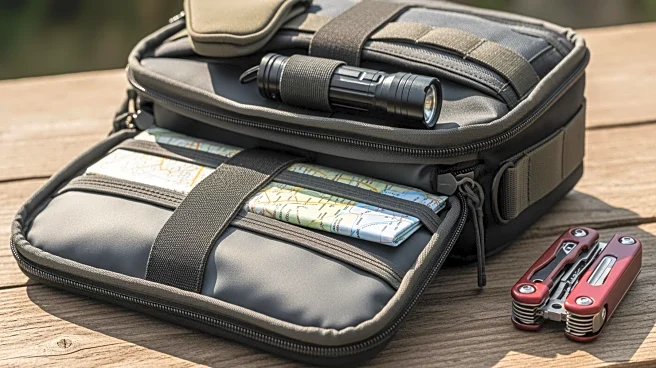
Experts are emphasizing the importance of having a personalized emergency go-bag as natural disasters become more frequent and intense. According to Stephanie Fox from the American Red Cross, having essential survival items ready can significantly aid
in navigating emergencies. Survivalist Ky Furneaux and wilderness educator Donald Dust advocate for creating custom go-bags tailored to individual needs, rather than relying on pre-made kits. They stress the importance of including items like water, food, and important documents, and maintaining a positive mindset during emergencies. The experts also recommend researching local disaster history to better prepare for potential emergencies.
Why It's Important?
The increasing frequency of climate-driven disasters in the U.S. underscores the need for preparedness. Having a well-stocked emergency go-bag can provide peace of mind and ensure safety during unexpected events. This preparedness is crucial for families, especially those with vulnerable members such as children, the elderly, and pets. By customizing their go-bags, individuals can ensure they have the necessary supplies to survive and adapt to various emergency scenarios. This proactive approach can mitigate the impact of disasters on communities and reduce reliance on external aid during critical times.
What's Next?
As awareness of the importance of emergency preparedness grows, more individuals and families are likely to take steps to create personalized go-bags. Organizations like the American Red Cross may continue to promote preparedness education and provide resources to help people build their kits. Additionally, there may be increased advocacy for community-level preparedness initiatives, encouraging local governments to support residents in disaster-prone areas. This could lead to more widespread adoption of emergency preparedness practices across the country.
Beyond the Headlines
The emphasis on personalized emergency go-bags highlights a broader cultural shift towards self-reliance and proactive disaster management. This trend may influence public policy, encouraging governments to invest in community resilience programs and infrastructure improvements. It also raises ethical considerations about access to resources, as not all individuals may have the means to prepare adequately. Addressing these disparities could become a focus for policymakers and community leaders, ensuring equitable access to preparedness resources for all citizens.