
What's Happening?
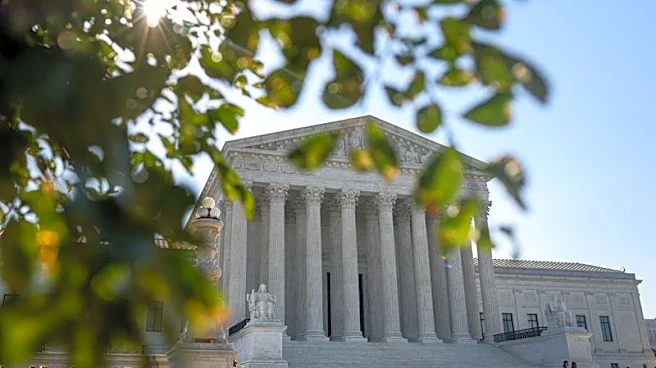
The Supreme Court's recent decision in Callais v. Louisiana has significantly weakened the Voting Rights Act, a pivotal piece of legislation that has protected minority voting rights in the South for decades.
This ruling has sparked outrage and concern among civil rights activists and families of those who suffered during the Civil Rights Movement. The decision is seen as a regression to the 1960s, a time when African Americans faced severe discrimination and violence in their fight for voting rights. The ruling allows state legislatures, particularly in the South, to redraw political maps in ways that could diminish Black political representation. This has led to protests and a sense of disbelief among Democrats and civil rights advocates, who view the decision as a step backward in the fight for equality.
Why It's Important?
The Supreme Court's decision has profound implications for the political landscape in the United States, particularly in the South. By undermining the Voting Rights Act, the ruling could lead to increased gerrymandering, which may dilute the voting power of minority communities. This could result in fewer Black representatives in Congress and state legislatures, effectively reversing decades of progress made since the Civil Rights Movement. The decision also raises concerns about the integrity of the democratic process and the potential for increased political polarization. For families who lost loved ones in the fight for voting rights, the ruling is a painful reminder of past injustices and a call to action to continue the struggle for equality.
What's Next?
In the wake of the Supreme Court's decision, civil rights groups and activists are likely to intensify their efforts to protect voting rights through grassroots organizing and legal challenges. There may be increased pressure on Congress to pass new legislation that addresses the gaps left by the weakened Voting Rights Act. Additionally, the decision could become a focal point in upcoming elections, with candidates and political parties using it to mobilize voters and shape campaign narratives. The ruling may also prompt further demonstrations and public discourse on the state of democracy and civil rights in the United States.
Beyond the Headlines
The Supreme Court's ruling not only affects the political representation of minority communities but also highlights broader issues of racial inequality and systemic discrimination in the United States. It underscores the ongoing struggle for civil rights and the need for continued vigilance and activism to protect the gains made over the past several decades. The decision also raises ethical questions about the role of the judiciary in shaping public policy and the potential for partisan influences to undermine the principles of justice and equality. As the nation grapples with these challenges, the ruling serves as a reminder of the importance of civic engagement and the power of collective action in driving social change.