





What's Happening?
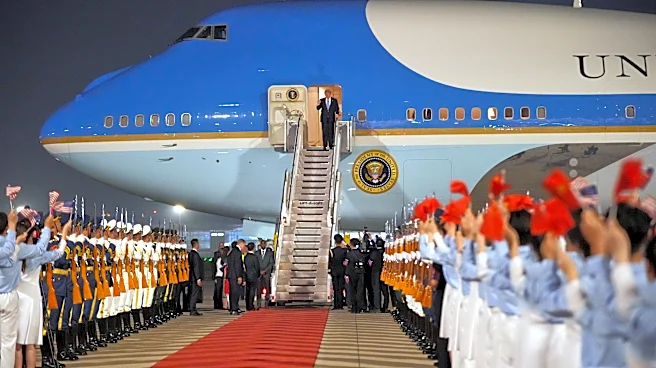
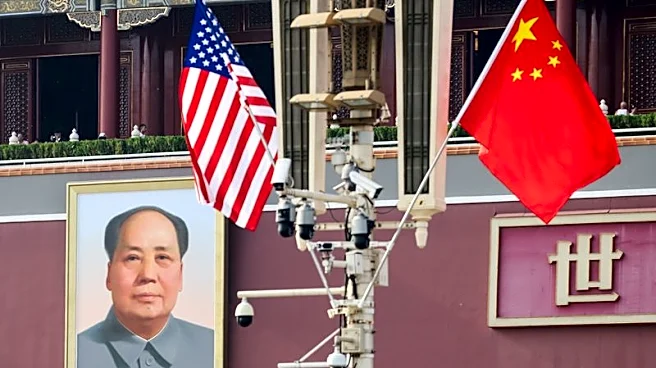
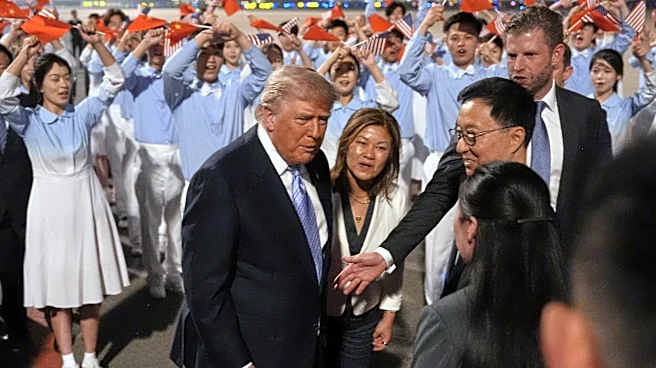
Presidents Donald Trump and Xi Jinping have initiated landmark trade talks in Beijing, aiming to address longstanding economic tensions between the US and China. The summit, marked by ceremonial displays, includes a delegation of US business leaders seeking
to expand market access in China. Trump has expressed a desire for reciprocal trade agreements, reminiscent of early 2000s US-China economic relations. The talks focus on reducing trade barriers and fostering cooperation in sectors like aerospace, IT, and agriculture. Both leaders are under pressure to deliver economic gains, with Trump facing a midterm election year and Xi seeking stability amid global scrutiny.
Why It's Important?
The trade talks are crucial for both nations, with potential impacts on global economic stability and bilateral relations. For the US, successful negotiations could boost domestic industries and address trade imbalances, providing political leverage for Trump. For China, easing trade tensions could support economic growth and enhance its global standing. The summit's outcomes could influence international trade policies and affect global markets, particularly in technology and agriculture. The talks also highlight the strategic competition between the US and China, with both nations seeking to assert their influence on the global stage.
What's Next?
Following the summit, both countries are expected to continue negotiations on trade and economic cooperation. The US may pursue further agreements to enhance market access, while China will likely seek assurances on tariff reductions and technology access. The international community will closely monitor the summit's impact on global trade dynamics and regional security. Future diplomatic engagements between the US and China will be critical in shaping their bilateral relationship and addressing ongoing geopolitical challenges.