




What's Happening?
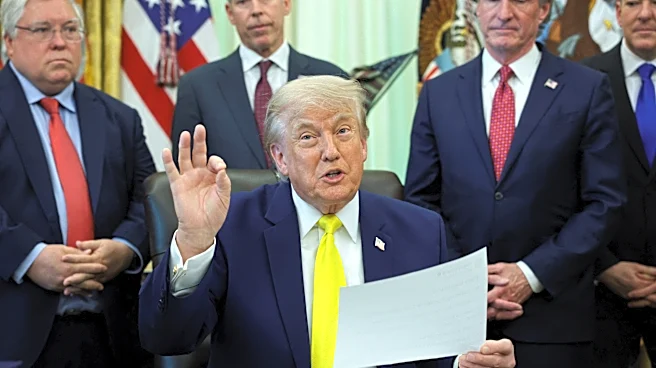
During a recent press briefing in the Oval Office, President Trump told CNN host Kaitlan Collins to 'be quiet' after she questioned him about the status of his $1.8 billion 'Anti-Weaponization Fund.' This incident is part of a pattern where Trump has
used similar language to silence female journalists. Linguist Karen Stollznow explains that such commands are a form of conversational control, targeting the speaker's right to participate rather than engaging with their arguments. This behavior has been criticized as part of a broader stance against women in power, particularly female journalists.
Why It's Important?
The use of silencing language by President Trump towards female journalists highlights ongoing issues of gender dynamics in media and politics. Such actions can undermine the role of journalists, who are essential for holding public figures accountable. The repeated targeting of female reporters may discourage women from pursuing careers in journalism or speaking out in professional settings. This behavior also reflects broader societal challenges regarding gender equality and the treatment of women in positions of influence.
What's Next?
The continued use of such language by President Trump may prompt further discussions and actions from media organizations and advocacy groups. There could be increased calls for accountability and changes in how public figures interact with the press. Media outlets may also implement strategies to support and protect their journalists from similar incidents in the future.
Beyond the Headlines
The implications of President Trump's language extend beyond individual interactions, potentially influencing public perceptions of gender roles and media credibility. This situation underscores the need for ongoing dialogue about respectful communication and the importance of diverse voices in media and politics.