







What's Happening?
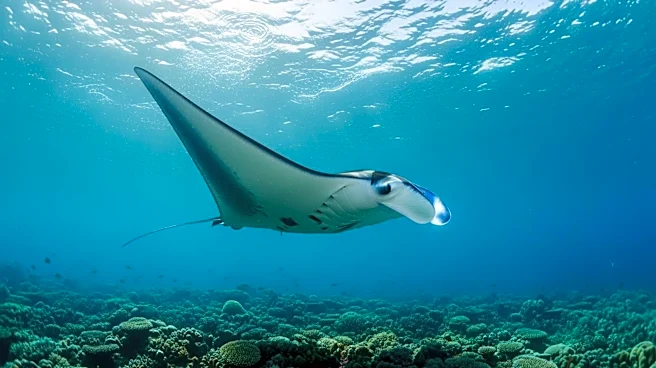
The Florida Fish and Wildlife Conservation Commission (FWC) has revised its policies regarding the capture of giant manta rays, following public outcry and political pressure. The decision comes after a viral video showed a manta ray being captured in distress,
prompting bipartisan calls for a complete ban on the practice. The FWC's new rule, effective July 1, 2026, allows manta rays to be captured only with the commission's prior consent and prohibits their international export for exhibition or education. This move is seen as a compromise, as it stops short of an outright ban but imposes stricter controls. The decision was influenced by a letter from 18 politicians, including Republican Congressman Brian Mast and Democratic State Senator Jason Pizzo, who argued that the practice prioritizes entertainment over conservation. The commission's decision also reflects concerns from animal advocates about the need for educational programs on vulnerable species.
Why It's Important?
The FWC's decision highlights the ongoing tension between conservation efforts and the interests of the marine entertainment industry. By tightening the rules, the commission aims to balance the need for public education on marine life with the protection of threatened species. This decision could impact the operations of aquariums and marine parks, particularly those relying on international exhibits. The move also underscores the influence of public opinion and political advocacy in shaping wildlife conservation policies. The decision may set a precedent for how other states handle similar issues, potentially leading to broader regulatory changes in marine wildlife management.
What's Next?
The new rule will take effect on July 1, 2026, and its implementation will be closely monitored by both conservationists and the marine entertainment industry. The FWC will likely face continued scrutiny from animal rights groups and politicians advocating for stricter protections. Future discussions may focus on the effectiveness of the new regulations and whether they adequately protect manta rays. The commission may also consider additional measures, such as public comment opportunities and transparency in issuing special activity licenses. The outcome of these discussions could influence future legislative efforts to protect marine wildlife.